The thunderstorm is furious. Every flash of lightning has me cringing in anticipation of the accompanying roar of thunder. The fear is both in the anticipation of the sound and in the knowledge that something, someone was potentially hit. They say that you can measure the distance of a lightning bolt by counting the seconds between the flash of lightning and the sound of thunder. One could have hit my neighbour.
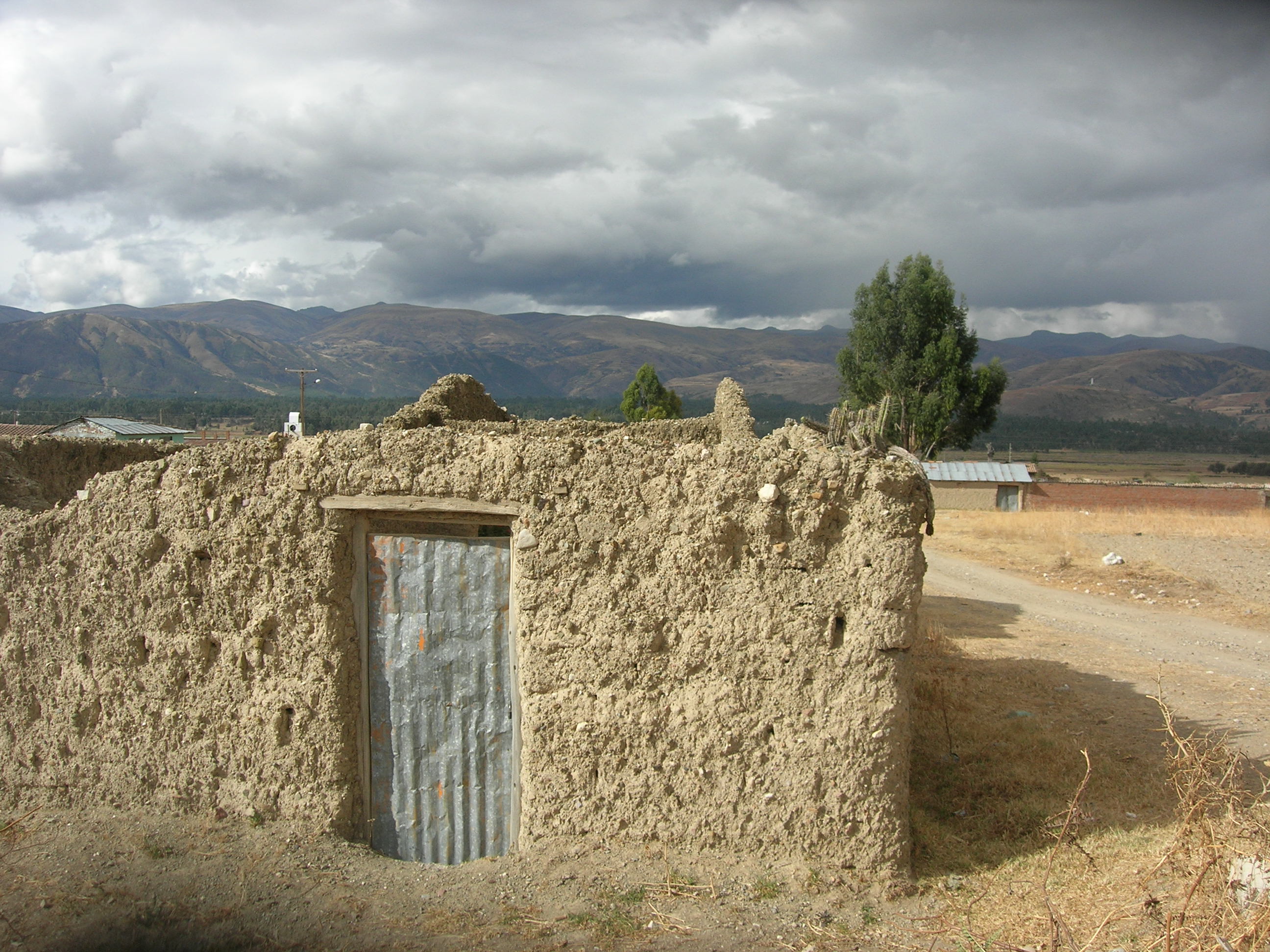
Houses made out of adobe are susceptible to collapsing under heavy rains.

As I’ve learned, any electronic device plugged in to an outlet is susceptible to exploding if a lightning bolt heads your way. It doesn’t help that many buildings are in various states of incompleteness, with long protruding metal bars for the possibility of constructing another floor. The poles reach into the sky, seeking communication with the jagged stretches of light. People are also at risk of being electrocuted by lightning bolts. There are various cases in the Mantaro Valley of electrocuted farmers; they are standing in the middle of their farmland with cell phone in hand.

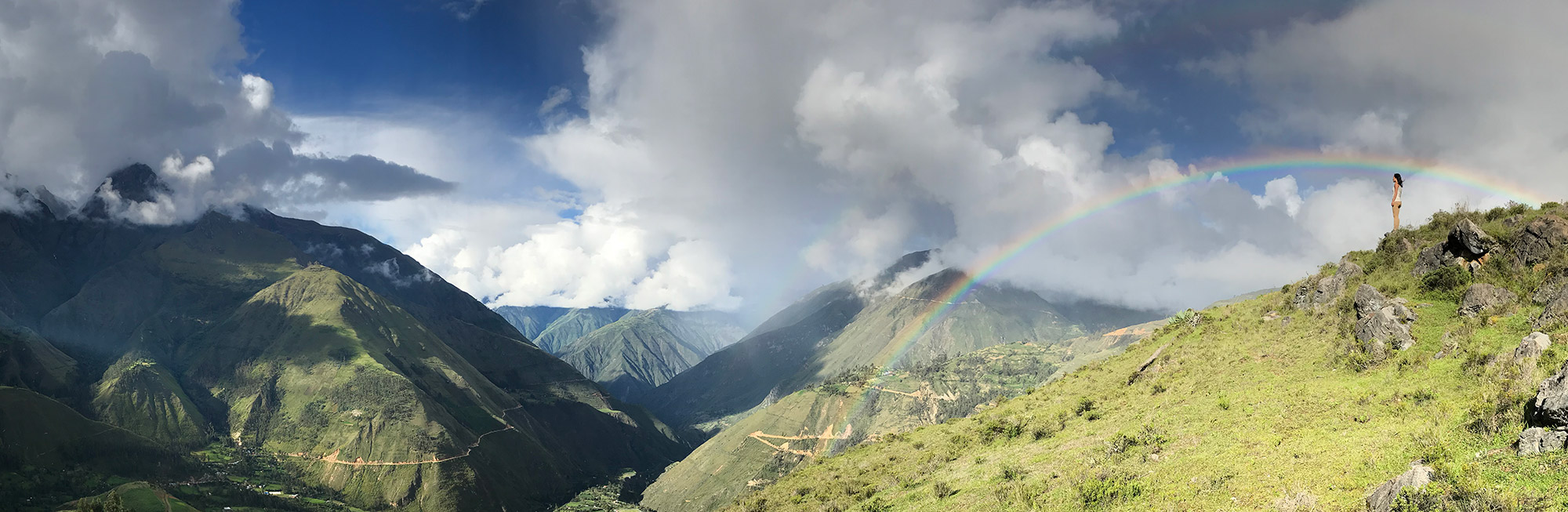
Intense stormy weather, torrential rains and spurts of hail are typical in the Central Andes. They are also typically unpredictable. It can be deathly sunny all day, and then the clouds roll in within minutes. I’ve gotten into the habit of carrying around a portable umbrella. Most people don’t. I think it has to do with the I’ll-take-it-as-it-comes attitude to life that I admire but have a hard time adopting.

As the claps of thunder die down, I feel cozy in my apartment as I listen to the rhythm of the heavy rain. I don’t mind it so much without the shocking, angry thunder. I wonder and worry about the thousands of people who live in adobe clay residences. They must dread the thundershowers when it means water dripping (or cascading) into their homes, muddy floors and wet collapsable walls. I take a look at the brick walls of my apartment and feel safe, until I notice droplets of water on the ceiling. I guess I didn’t ask for this to be easy.

What makes you feel cozy?
About to Get Soaked

When it comes to corporal punishment in the Central Andes of Peru, domestic abuse is still typical and it wasn’t too long ago that there were more extreme measures at schools. Parents wrap broken egg shells on the child’s hand with wool dipped in brandy, and then light it on fire. The alcohol produces a quick flame and the egg shells burn against the skin. Some claim that its purpose is to scare a child from robbing and that the flame is blown out or disappears as soon as it appears. Others show their scars from the burns.

Using a belt is also a typical way of punishing children. If one child is the culprit, all children are thrashed in the name of the Father, the Son and the Holy Spirit. It’s believed that all children deserve the same punishment and should learn the same lessons. Beating children is somewhat of a ritual on the Thursday and Friday of Easter. It symbolizes a holy sacrifice as they share the pain and suffering of Jesus on the cross.

At schools, children who arrived late were forced to kneel on beer bottle caps in front of the whole class. It left scars on their knees. Children who had a difficult time understanding a concept in class had their heads banged against the wall. Children who misbehaved were hit by a pointer stick, sometimes until the stick broke in half. These days, children are no longer abused in the classroom, but they are still punished if they arrive late — they get hosed with water and spend the rest of the day dripping wet.

This is apparently not so bad because it’s reminiscent of the entire month of February when the whole country “celebrates” Carnaval. In Huancayo, this celebration entails gangs of boys throwing water balloons or buckets of water at random girls. You have to watch out because people can even attack from their apartments or dunk you in the plaza fountains. I have already seen three ladies get soaked and I’m not prepared to be the next one!

Writing about combis last week got me thinking about how hilarious it is when the cobradores (money collectors) run to get their card stamped. Each combi has a card that needs to be stamped at various locations during the route. As I understand the set-up, there’s a penalty if a combi is consistently late — typically, it has to run the full route one more time. To avoid this, cobradores often jump off their moving combis up to three blocks before the checkpoint and run at full speed to get their cards stamped by a machine or signed by a waiting time-controller sitting at the corner of the block with a pen and clipboard. I’ve always wondered if it’s actually ever worth it for the cobradores to endanger their lives by running through traffic, only to shave off a few seconds. Sometimes it seems more like an excuse to move their legs after standing in the same cramped combi doorway for hours at a time.

Peruvian society often functions on the basis of punishments and rewards (or avoidance of punishment). The classic dictatorial boss can subtract from your pay or give you bonuses as s/he pleases. Corporal punishment is the norm (and so is domestic abuse for that matter) and children are hosed when they arrive late to school. In a government program for maternal and child health, families are given 100 soles for showing up to workshops. Even NGOs silently tell mothers, “If you don’t treat your children well and follow our recommendations, you won’t get gifts at the end of the year.” So then you hear mothers say, “I’m going to join this project because they’re going to give me a gift at the end,” when what you want to hear is, “I’m going to join this project because it will better the life of my child.” When I tried to raise my concerns about these extrinsic motivators, I was brushed off as the gringa who didn’t understand Peruvian society. “It’s the Peruvian way,” I was told. I accepted it.

Four months later, evidence starts falling into my lap that Peruvians themselves are trying to make changes and that the system of punishments and rewards doesn’t have to be “the Peruvian way.” A professor I used to work for encouraged me to meet with one of her contacts in Lima, Dr. Mary Claux. As I read up on Dr. Claux’s research, one of the first academic articles that arose questioned the need for authoritarian Peruvian leaders (article in Spanish). A good Peruvian friend shared his thoughts on leadership with me and he cited his own businesses as examples that a freer managing style without penalties or crackdowns works. He even sent me an enlightening and relevant TED talk presented by Dan Pink (below) that contributed to his belief system regarding the best way to motivate others.

It “CAN BE DONE,” my friend writes to me.

With renewed faith in my morals, I figure it might be worth a shot sharing this new evidence with the nonbelievers I have come to know in Huancayo.

The more I take combis (Peruvian public transportation) in Huancayo, the more I envision the combi as a microcosm of Peruvian life.

Resourcefulness

Today I rode a combi that had a little speaker hanging dangerously over the heads of some passengers. It was tied onto an inner metal support bar and wired to the front of the van somehow so that people in the back could enjoy the same Peruvian cumbia music as the driver. It wasn’t even working, but it’s the thought that counts.

Last week, when I hopped onto a combi to escape the pouring rain, there was a leak near the window and rain was dripping onto one of the seats. They stuffed a cloth into the crack to stop the leak. It would be temporary. The combi worked fine when it wasn’t raining. They were never going to fix that window.

To me, these are examples of resourcefulness and of taking advantage of what’s available. They’re examples of being okay with imperfection. The lesson is to care less about the little details and more about making something functional. It’s about using something for its full worth and then finding ways to extract even more out of it, instead of continually buying the latest gear or replacing the whole package because of a tiny tear.

Tolerance

I have been on various interrupted combi rides. Sometimes the combis take a different route because there’s a parade or party going on downtown. Sometimes they take shortcuts without warning their passengers or explaining why. Sometimes the police will stop the combi for going too fast or taking passengers in undesignated areas, and everyone on the combi has to wait.

It’s impossible to know what to expect and things aren’t always fair, but they happen so you live with them. People learn to let things go. Maybe sometimes toleration is expressed as repression or resignation, but what’s important is knowing when to choose their fights. Toleration can also be seen as a type of acceptance. In the grand scheme of things, life isn’t ever fair and this realization melts indignation and demands respect.

Community

At any given time, you may ride a combi in the company of dogs, chickens, piglets, or even sheep. The owners often hop on with large mantas (a large cloth ladies use to carry load on their back), filled with what they’ve bought at the market as if their mantas were large purses and shopping bags combined into one.

There are unspoken rules to help each other out. The cobrador (money collector) always helps the ladies with their things, especially if they have extra boxes. The passengers get up to give the ladies their seats. Not only do these ladies get priority seating, but I’ve also seen people get up for seniors and pregnant women just like in Canada.

Sometimes, a child or recovering drug addict gets on the combi to sing or tell their life story, and then ask for our “collaboration” with whatever we can spare. You see the nod of the cobrador: “Come on in. I know what it’s like to live a hard life too.” And after the presentation, the passengers on the combi share — at least half of them.

There’s poverty here, but it hasn’t become cut-throat, at least not in the Andes. There’s still a sense of community. It’s near impossible to live an isolated lifestyle. Huancainos know that no man is an island and being packed into a combi together is only a physical affirmation of the links between you and your neighbours.

Scary Men

In Lima, there’s a bus terminal in a shady part of the city called Yerbateros. It houses all of the buses that go to the province of Junín; the majority of them go to Huancayo. This is where you go to pay $3 for a bus ride to Huancayo, 8 hours away.

Whenever we arrive at the Yerbateros terminal, we’re always bombarded by a group of men the second we get out of the taxi. “Huancayo? You’re going to Huancayo?” all of them say at once. “I’ll take you there for 50 soles.” (This is around $17). They’re “taxi” drivers, they say, but about half of them just have their own personal cars and want to make some extra cash during their ride home.

I have always been afraid of these men. I’m especially afraid when I have luggage with me. I ignore them. I always take the bus anyway, they’re cheaper and they seem safer because you share your fate with 50 people instead of 5.

So, I wasn’t feeling the most secure when we arrived at the Yerbateros terminal this past Wednesday and got out of the taxi only to be faced with a double threat. The taxi driver who drove us over from the airport wanted to harshly overcharge us for the trip while we were being besieged by the intimidating crowd of “taxi” drivers at the terminal.

It was a mess. The airport taxi driver had initially told us that he was charging us “20,” but only later revealed that he meant “$20” and not “20 soles” and would also be adding $15 dollars to that price because of the extra traffic that he hadn’t expected. We knew we were being cheated because we’ve taken the trip between the airport and Yerbateros many times. We can often get there by paying only 30 soles and this guy was charging us 100 soles!

“They’re having an argument! Let them talk!” one man from the crowd says to another who was in our faces, trying to find out if we were going to Huancayo.

“How much is he charging you?” another man asks us. When the crowd hears the amount of money the airport taxi driver is trying to steal from us, everyone is outraged.

“How can he charge you 100 soles for driving an hour and a half from the airport if we only charge 50 soles for a 5-hour drive to Huancayo?”

“That’s abusive. Don’t pay him!”

“I’ve driven here from the airport so many times. I take route X because it’s faster and I only charge 40 soles maximum. He must have taken you through a longer route on purpose.”

“I have the special license to enter the airport grounds and only black taxi cabs are allowed in. This car is a white car. It must be his own personal car, just painted.”

“Robber! He’s charging you way too much.”

“Call the police!”

And one of the men actually did go call a police officer who was nearby. The crowd shouted out their grievances on our behalf. The police officer took a walk around the car. Soon after, we see the airport taxi driver taking off his tie and removing the taxi’s front tire. We hadn’t even noticed when it had deflated. The police officer would be taking him to the local jail to do a background check and to call his so-called company. If his taxi company even existed, he may have been overcharging passengers and pocketing the money for himself. We later remembered that the business card he showed us at the airport to prove his credibility said “Forza Tours,” but the official receipt he gave us cited a completely different company name.

I felt really thankful that we had all of those men on our side. They were even less insistent after: “You’re taking the bus? Yeah, it’s cheaper anyway.” I started seeing them as other Huancainos, neighbors that I may see on the streets of Huancayo. I wondered if I had seen them before at Yerbateros and I wonder if I’ll see them again some day.

What has renewed your faith in humanity recently?

Comparisons

Over the past couple of weeks, I’ve met and caught up with various friends, some I’ve kept in regular touch with and others that I haven’t seen in a long while. A recurring theme in our speech has been self-comparisons. “I think I’m a little bit… like Peruvians, like my mother, like that cat, OCD, autistic.” The list goes on.

I like the idea of recognizing everyone and everything that have influenced our development and that help define who we are. It can almost seem arrogant to state: “I think I’m completely like me and only me.” I also like how comparisons have us focusing on the similarities we have with others rather than the differences. We find ways to relate to others, reminding us that we’re not alone in the world. Reflecting through comparisons also helps us understand ourselves.

At the same time, I’m conscious of the dangers. It suddenly becomes easy to let a comparison be self-limiting and predictive of our future. No one in my family is artistic, therefore I shouldn’t and don’t have any creative talent. Based on the experiences of other expats I know, I’ll never develop my Spanish if I decide to teach English in Peru. We take less responsibility for our actions and the only way out is through recognition of our passivity.

My wish for this year is that my time in Peru continues to make me feel like I’m living a life filled with possibility, that it continues to make me feel free and courageous. I hope to feel new every day.

Restlessness

“By relocating ourselves, reorienting ourselves, we shake loose the shackles of expectation. Adrift in a different place we give ourselves permission to be different people.” – Eric Weiner

There seems to be a lot of chatter about changing on the inside. If you can’t be happy here, then you can’t be happy anywhere. Traveling is escapism. I must beg to differ and sometimes I wonder if this kind of talk can come from people too scared to take a chance or resentful that they never did.

The more I travel, the more it becomes clear that at least for me, the environment makes a difference. I’m comfortable in Vancouver with a thorough support network and everything I need available to me but “comfortable” isn’t currently part of my inherent definition of the good life. So if I have the opportunity to act on my restlessness, I’ll take it.

A quiet lady that I met at a workshop told me about her move to Vancouver from the Netherlands. She was criticized. Her friends and family thought she was looking for something else and/or that the Netherlands wasn’t good enough for her. It was neither, she said. She didn’t elaborate but I found that I felt the same way.

A Matter of Perspective

If I were to describe how I felt coming home for the holidays, I would have to say that it was like one big relaxing sigh. But I don’t think it particularly had to do with home (as much as I was looking forward to being with my family, the coziness, central heating, and very yummy food). I think the metaphorical full body sigh had more to do with the 8-hour bus ride, afternoon in Lima, four airports with three layovers, and the four trains between New Jersey and New York. It took me two days to get home.

I imagine my big sigh starting with a tensing up of my whole body – I clench my hands into fists, curl my toes, grit my teeth, and shut my eyes tightly. There is so much tension that I can only possibly concentrate on and think about myself. And then I slowly – very slowly – release and relax each body part one by one. My hands unclench so that I can touch a shoulder when I greet “Merry Christmas” to another. My shoulders drop from their hunched position into a more welcoming posture. My toes uncurl so that my feet can be flat on the floor and I feel grounded to the earth. My organs relax into their usual rhythm, a similar rhythm as the human next to me. My eyes, ears, mouth, nose, and fingers are open so that my senses can absorb the world.

I met a friendly gentleman on the last leg of my trip who was the son of a foreign services officer. He had lived all over the earth (some highlights include Geneva and Barcelona) but has now settled down in Victoria, BC, his favorite place in the world. I told him about the reasons I moved to and loved living in Peru and they were the very same reasons he moved to and loved living in Victoria. It made me think that it was all about perspective and relativity. Maybe it’s not always, if ever, about comparing North and South American society or my Asian background and South American culture. Maybe it’s about being able to achieve an openness so that we can learn about others and ourselves. Maybe this openness is facilitated by travel.

When I’m travelling, I feel that my body and mind radiate a level of receptivity that I’m not able to achieve at home. I expect that things will be different where I’m going and I’m curious so I’m open to learning. I’m surprised when things are different, but I’m equally surprised when things are the same. In a way, I naturally become more self-reflective when I’m in a different place. I learn more about my own city and culture (things I’m able to learn at home but don’t) because people ask me why I do the things I do.

I guess I’m just attracted to learning about anything and anybody in any way.

Reincarnated

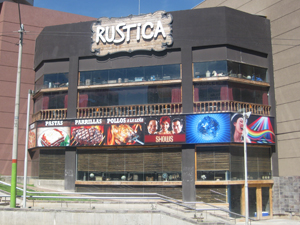
In early October, I posted about the widely publicized and public demolition of Rústica, a Limeño restaurant/club that was on the verge of opening for the first time in Huancayo as a section of the sole mall in the city. The political drama surrounding the incident was more intricate and complex than I originally thought.

Rústica Renovado
After the demolition a couple months ago, Rústica is now as good as new.
Update: Rústica is now fully-functioning and a popular hang out spot for those who have a little extra money to spend. The ground-level is a karaoke bar and club while the second floor is a scrumptious restaurant (my favourite dish is the pizza).

It turns out that the person responsible for the October demolition was Jorge Rodríguez, a provisional mayor who was probably taking advantage of the limited amount of time he would be in power. People agree that the mayor before him, Freddy Arana, was generally a good mayor. He just had some big people in government who weren’t on his side.

Rústica Huancayo
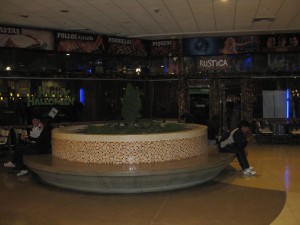
This is what Rústica looks like from inside of the mall.
When Arana was usurped, Rodríguez was appointed in his place but knew that he would only be in the position for a few months because the national mayoral elections were coming up. When the Rústica opportunity arose, he jumped at the chance to make a name for himself. He called the national press and rallied his men to demolish instead of giving Rústica time to respond to the government’s demands regarding the licenses they needed. It became obvious that it was a set-up when all of the press left after Rodríguez felt he had achieved his goal; the journalists didn’t even stick around to hear Rústica’s side of the story. They were probably being paid to be there. Only one set of journalists stayed – an old man and his son who were taping for a local channel.

Alone

“Loneliness is the most terrible poverty.” – Mother Teresa

I have always wondered how people can live alone – not single or independent, but isolated. Even though I like to consider myself a homebody and I find pride in being able to enjoy busying myself with solitary tasks, I can’t imagine a life devoid of family, coworkers, friends, and a partner.

They say that there was an old lady who lived across the street from where I used to live in Huancayo who trusted only one person, who only had one friend. The people she trusted the least were her family members. She was always afraid that her sisters would try and steal her money. She was rich by Peruvian standards.

She paid a neighbour to help her fix her water pipes one day. She let him into her home, and closed and locked the door behind him. She unlocked a second door to let him through, and then closed and locked that one behind him. There were three “front” doors in total. When they were done, she let him out with the same tedious unlocking and locking process.

The one friend had a copy of the keys to the old lady’s home in case of emergency – she was a storekeeper who lived at the end of the street. Other than their habitual gossip sessions, the old lady could usually be found sitting in front of her building, watching the goings-on of her neighbourhood. Every morning, she would open her garage for a bread vendor who stored her materials there.

One morning, the bread vendor was frustrated that the old lady wasn’t opening the door for her. With her regular customers complaining behind her, the vendor pleaded with the old lady’s friend – the storekeeper – to open the garage door for her. The storekeeper refused to open the door without explicit permission from the old lady.

In the afternoon, the police were called in. They found the old lady lying on the floor, near death. A few minutes later, she was gone. She could have been saved if someone had found her earlier.

Copyright © 2026 Samantha Bangayan | Sitemap | Disclosure Policy | Comment & Privacy Policy
All articles and photos in this blog are licensed under the Creative Commons Attribution License CC BY-NC-ND 3.0.