
Miaus and Guaus
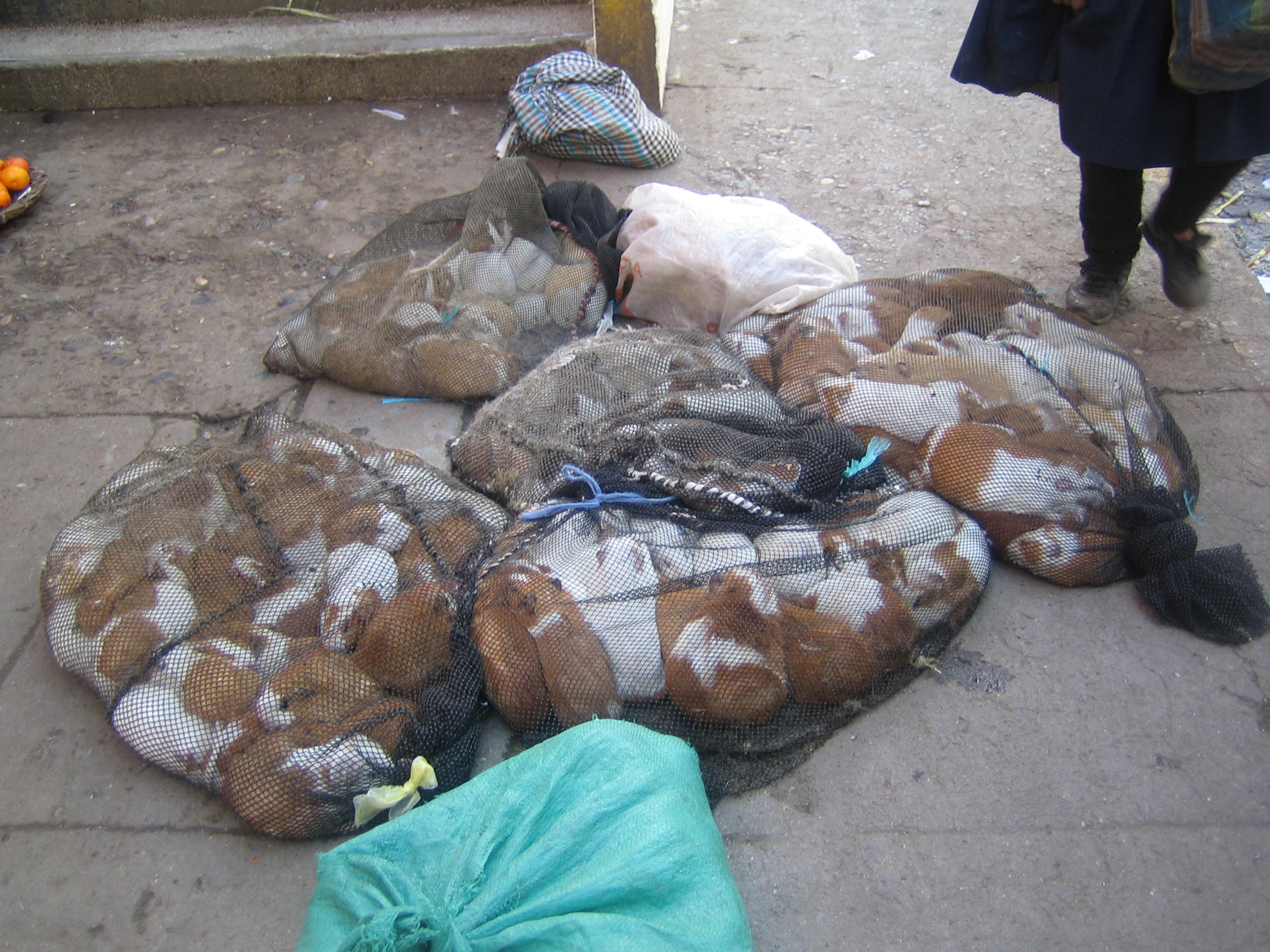
Huancayo is surrounded by farmland, so I’ve encountered a myriad of animals ranging from livestock for livelihood to city pets in silly clothes. Some animals have a purpose: cows for fresh milk, donkeys for reliable transport and alpaca for soft wool. There are also animals raised solely for food: chickens and pigs. Other animals are clearly pets: dogs, cats, hamsters and iguanas. I’m still getting used to the fact that guinea pigs are always raised for food, often cooked as a special dish, and never kept as companions.
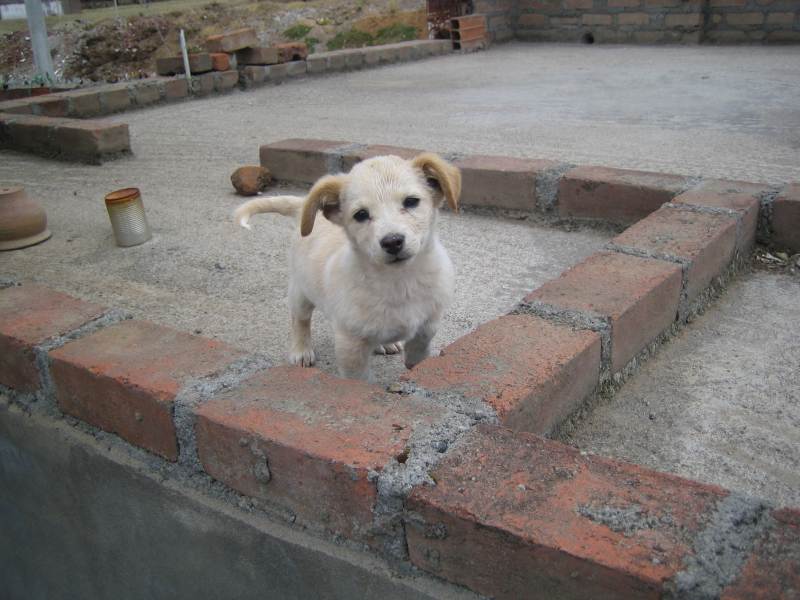
Since neutering is expensive and uncommon, Huancainos are more likely to receive a puppy from a friend or pick up a stray kitty. Some homeowners have come-as-they-go pets who show up during the day to have a snack, hang out for a while and then leave every evening. Stray dogs are rampant here. They often walk right beside you and sleep in the middle of the sidewalk as if they own the city. You’re part of their daily drama when it comes to scavenging, playing, fighting and copulation. In the more rural areas, stray dogs can be vicious, so you always carry a rock around and hopefully, never have to actually throw it.
To communicate with Peruvian animals and animal owners alike, the foreigner must learn new vocabulary of onomatopoeic words. Cats are almost always called “Michi,” often in place of an actual pet name. This name apparently derives from the sound they make: “miau” (“meow”). Dogs are usually pinned “Fido” (“fee-doh”) and they say “guau” (“wow”). I still don’t understand how chicks “pio pio,” although it probably makes more sense that I wake up to the rooster on the fourth floor greeting me with “ki ki ri ki” rather than “cock-a-doodle-doo.” The only other animals that seem to express themselves similarly to their North American counterparts are pigs (“oink”), ducks (“cuac”) and cows (“muu”).
We welcomed a kitty to the family last Thursday and were surprised to learn that he speaks both cat and dog languages, miau-ing and guau-ing in his conversations with us. After a day of fear and loathing for getting him vaccinated, Fénix (Spanish for “Phoenix”) is now purring like a motor, playing with all reachable shoelaces and falling into unescapable buckets:
Tags: andes, animals, animals in peru, cats in peru, culture, farm animals, stray dogs in peru
Karen
That's so awesome! You have a kitten! I so wish I could have one, but I just have to be satisfied with visiting the kitties in Parque Kennedy! I hope to meet Fénix some day!
Samantha Bangayan
I hope you meet him too! =) Now that I think about it, maybe those adorable cats at Parque Kennedy changed my mind about kittens in the first place! I used to only love dogs. =P
writing4effect
Great story, Sam, and your baby kitty is soooo cute. I love guinea pigs as pets and I can't imagine eating one. Very interesting information, as always.
Samantha Bangayan
!! =) Thanks, Sherry!
A guinea pig dish is unpleasant, in my opinion. =P
Manuel Páucar
Nice post! Actually, "michi" is a short version of "Michifús." In its day, it was a very common and traditional Hispanic name for cats. That name is featured in some folk stories for children in several countries, including México, Colombia, Argentina, Perú, and I think Spain too. Some variations to the name that I've seen are: Michifuf, Mitsifus, Michifuz, et cétera.
Garry
Hi Sam,
Kyra often sits on my lap while I am on the PC. I was explaining your article to her and of course she asks "What's a guinea pig". So I googled a photo for her. "Oh daddy, they are so cute!". Then a look of horror when she realized people ate them. She still wants one. Maybe when she is older, she just turned four. I promised we would not eat it.
Love reading your posts.
Take care,
Garry
Samantha Bangayan
Adorable, Garry — so happy to hear from you! =) *Wave to Kyra!* I also promise that I won't eat your future guinea pig!
Kelly
Congrats on your new kitty! I'd like to have one, but just don't think it's a good idea with all the birds in the yard. 🙁
I had heard that in "Michi" is a popular cat name in Peru, because it comes from the Quechua word for cat, but I don't know if that's true or not.
Samantha Bangayan
I bet you're right about kitties and birdies not mixing! Fénix attacks everything, even wall corners. =P Maybe you could have a strictly house kitty?
I also heard that about "Michi" being Quechua, but my partner's mother speaks Huancavelican Quechua and says that they don't use "Michi" in her dialect. Maybe another dialect of Quechua or an adaptation of a Quechua word.
Abe Palmer
Looked like kuuwee (guinea pig) tastes like chicken I kept telling myself. Was good, would have been better had I not noticed the empty cages before dinner.
Samantha Bangayan
HAHA! Maybe I can handle eating cuy if I adopt your strategy and think about chicken. =P
T.S. Bazelli
oh Fénix is adorable! Those sacks of guinea pigs did make me pause though. I know they're food, but I still can't help think of them as pets. Loving learning about the details of life in Huancayo. Looking forward to more 🙂
Samantha Bangayan
Same here! Furry little creatures are pets, in my opinion! =)
Thanks for stopping by and glad we're in touch, T. =)
Dennis Salvatier
I'm learning something new every time I come back. What a great name for a cat. Glad he found you guys.
Samantha Bangayan
I've already learned so much from you, so I'm ecstatic that I've been able to share new tidbits with you too. =)
J. P. Cabit
Aaaaawwww, Fénix is své cute!! 😀
Samantha Bangayan
Haha! I think Fénix says "thanks" (which came out like "Miau").
You're a great teacher — I'm slowly picking up your lingua cabit vocabulary! =)
J. P. Cabit
😀 Ooh, landing my first job in teaching Cabitese…how illustrious…
Samantha Bangayan
Thanks for stopping by and leaving a comment, friend! Fénix the kitty touches my heart day in and day out! =)
Health or Warmth: A Case of Mites | What Little Things?
[…] and pull the tab on the can of Raid that will thoroughly clean out our small home. We then take Fénix the kitty out for the afternoon, until the apartment has finished […]