Peru is a country of tradition, so there’s often a fiasco when someone breaks the norms. Overcoming the prejudices takes self-confidence and a strong belief in oneself. Ana tells us about her experiences and how she faces the discrimination.
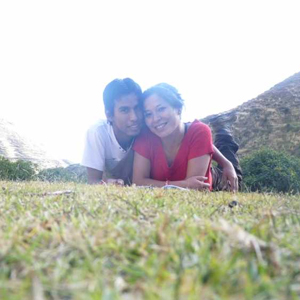
Ana's family and friends give her a hard time about her relationship with Deiby, seven years her junior.Ana Santillán Muñoz is 31 years old and has made a name for herself as an architect and the president of an NGO, gaining the respect of her peers and employees despite being a young female in positions of power, a not-so-common phenomenon in the Central Andes. Now she faces the jury of social norms once again concerning her long-term relationship with Deiby, seven years her junior. “The hardest part about it has been the prejudices, not only because I’m older, but also because I have more studies behind me and already have an established life,” she explains. “I have a role in society and others have a hard time dealing with me mixing roles.”
They’ve been together for almost a year, yet Ana’s family and friends continue to show their disapproval. Most of the time she reacts in silence or doesn’t pay attention to what others say; other times, she defends herself by reminding the critics that it’s her life. “It’s most difficult with my family because their opinion matters to me,” she explains. “But in time, they’ll see that I’m happy.”
Ana's relationship with Deiby has changed her.The relationship has changed her. “I’ve never been the housewife type,” Ana admits, but now she cooks, does laundry and shops for groceries. “I saw myself in the mirror the other day at the supermarket and wondered what had happened,” she jokes. In the past, she imagined herself traveling all over the world and never saw the need for a house, but now she wants to settle down in Huancayo and have her own space with her partner. In fact, she’s even thinking about having children.
Her advice for people in a similar situation? Have patience and tolerance. “As women, we want to solve things,” she reflects. “But you can’t ‘fix’ another person.” Ana also notes that she and Deiby are the best of friends. “It’s less scary to say the difficult things if your relationship is also based on a friendship.”
How have you been different from the norm and how did you face the ensuing challenges?
P.S. This post was scheduled — I’m still traveling and I’ll be back by early next week! I promise to respond to comments and give love to your blogs when I return! =)
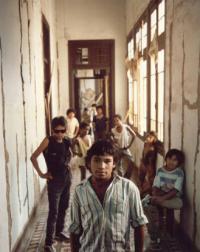
When 12-year-old Juliana is belted by her step-father 27 times, it’s the last straw; she escapes from the abusive situation and hits the streets. And so begins a tale of courage and resilience in Lima, Peru.
Juliana disguises herself as a boy to work on the hard streets of Lima, Peru.
“Juliana” is one of Peru’s timeless classics, brought to screen by Grupo Chaski. Humbly winning over ten international film awards, “Juliana” tells the story of a spirited young girl who takes life into her own hands. She disguises herself as a boy to join a motley crew of talented kids who make money by entertaining in the streets.
The Afro-Peruvian boys from the coast work together — one plays the cajón (a percussion instrument that looks like a box) while the other dances. The boy from the rainforest uses a tin can as a mini drum and güiro, making rhythm by sliding over the side with a stick. He sings on micros (large combis) while another kid collects money from passengers. Other children have turned into thieves.
The street gang is led by the wily Don Pedro. He gives the boys pointers on how to look poor, takes them to the beach and tells them crazy stories, provides them with shelter and feeds them. Unfortunately, he’s also prone to mood swings and demands that each child bring in a certain amount of money each day. Any child who doesn’t make enough suffers Don Pedro’s wrath behind closed doors.
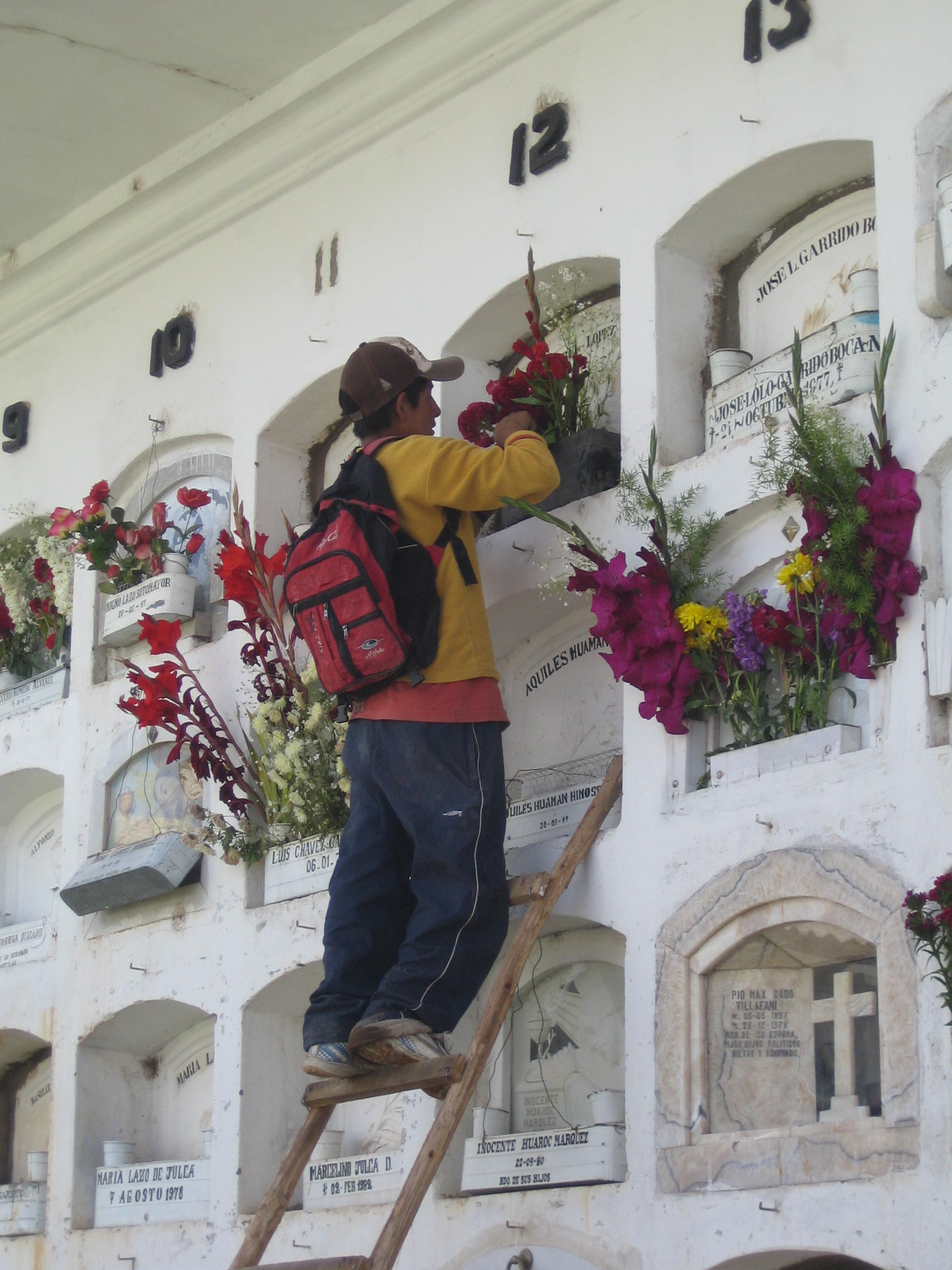
In a Peruvian cemetery, coffins are inserted into cubicles above the ground and children help you carry up and water your flowers.The beauty of “Juliana” is that it imparts snapshots of Limeño life in the 80s that ring true even to the present day. I still see the same types of characters and events:
The widowed mother puts up with her new partner’s abuse because she’s afraid of loneliness.
An evil, beer-bellied step-father represents Peru’s machismo culture. He’s a drunkard who orders his family members around like servants.
Juliana works at the ancient Presbítero Maestro, the oldest cemetery in Lima, inaugurated in 1808. She converses with the dead as she cleans their tombs and waters their flowers.
Juliana chases down and fights with some kids who rob her.
In their free time, all the kids who work in the cemetery play soccer amidst the tombs.
Juliana will inspire you to never lose your spirit, especially when life gets rough. She will show you what it means to be creative because sometimes creativity is exactly what’s needed to make the best of a bad situation, to find your way and to survive. You can watch “Juliana” in Spanish on YouTube.