When I first arrived in Huancayo in 2008, I took a tour with a stellar tourist agency in the area: Adrenalina Tours. This past month, I was able to meet the director of that very agency, Katty Mosquera. In the video below, she chats with me about why tourism in Huancayo is so important and what you’ll see on the traditional tour of the Mantaro Valley:

Peru’s main attraction is the pre-Columbian Inca site, Machu Picchu, but there is so much more to experience in this country. Huancayo, where I live in the Central Andes, is rarely mentioned in tourism advertising, but that doesn’t mean it’s not worth stopping by!

These are the top four reasons you should include Huancayo on your next trip to Peru and South America:
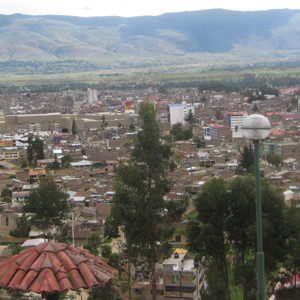
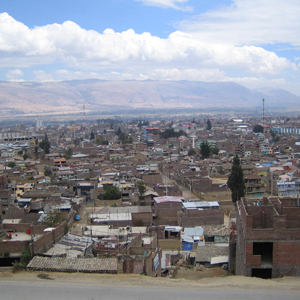
Vista de Huancayo
Huancayo is a mix of old and new.
  1. What I appreciate most about Huancayo is the mix of old and new. The very first mall in the area opened its doors in 2009 and the main marketplace is right beside it. The city has a population of over 300,000 residents yet is surrounded by farmland. Every Sunday, you can catch the flag-raising ceremony at the main plaza and then head down to the 10-block fair in the middle of the city to meet rural vendors who come in from all the surrounding towns.
  2. There’s always something to celebrate in Huancayo. In fact, it’s famous for holding more fiestas than days of the year! And the people are so friendly and welcoming that you’ll find yourself invited to all of them.
  3. Huancayo is certainly off the beaten path, so you’ll learn more about how Peruvians in the sierra truly live without the pretense that exists in touristy areas. No one will ask you to pay for taking a picture or for asking questions, and no one will give you a more expensive English menu; yes, these things happens in Cuzco.
  4. Katty says that around 90% of her clients are domestic. Since there are so few foreigners and Huancaínos who can speak English, you’ll be forced to whip out your Spanish. Don’t worry! You won’t feel embarrassed because the people are warm and helpful here.

If you’re thinking of taking that 8-hour bus ride from Lima to Huancayo, check out the Huancayo Travel Guide I put together for my good friend, Tony Dunnell, the Peru Travel Guide at About.com.

What are the hidden gems in your area of the world?
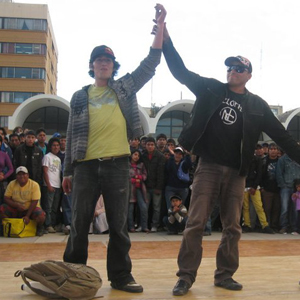
Dance means a lot to Valentino, a breakdancer in Huancayo. To him, every new acrobatic move or dance step symbolizes life’s challenges. Every new achievement on the dance floor acts as a reminder that there are no limits in life.

In this video clip, Valentino shares why dance is important to him:

It takes a lot of time, effort, discipline and practice to learn a new breakdance move. You don’t always see the tangible improvements, but somehow, one day, you’re flipping and spinning on your hands, feet and head. “It’s like medicine,” Valentino says. “It relaxes me and helps me recuperate.”

Breakdance Huancayo
Valentino has won his fair share of breakdance competitions, but that's not why he dances.
Things haven’t been easy for him these past few years. He has a 2-year-old daughter and is steeped in debt because of various failed businesses. It’s dance that helps him let go and brush away fear and self-doubt, motivating him to keep fighting for something better. He continually sees how he is able to push his limits on the dance floor and applies the same hope to his life and career.

As he explained this to me, I considered them lessons:

  1. We don’t always see that we’re growing and changing, but we have to keep chugging along and one day, we make wiser decisions and are proud of ourselves.
  2. When things get rough, we can call on past achievements to carry us through, and remind us of our value and strength.

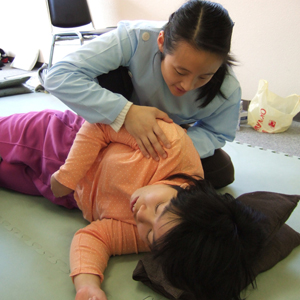
Whenever I face self-doubt, I try to remind myself of the work I did in Japan. My research was on children with disabilities and it involved attending weeklong camps where we worked one-on-one with a patient using a Japanese psychorehabilitation technique.

Terapia Japonesa
The year I spent in Japan was one of the toughest years of my life.
I had no idea what I was doing, I was the only foreigner there, I had little experience with people with disabilities aside from family members and I didn’t feel comfortable speaking the language after spending the first six months just trying to get the three alphabets down. But the teaching system involved throwing me in there and having me learn as I went along, reporting to and learning from a supervisor in the evenings. What’s worse is that I never had time for myself — I slept, ate and even bathed with everyone else. During the second camp I attended, I quietly cried myself to sleep every evening feeling incompetent and ashamed. I listened to my own demons telling me that I couldn’t do this.

I don’t know what changed, but something did over six more months until it came time for the last camp before returning home to Canada. This time, I didn’t have a translator, I took each therapy session as a learning experience with my trainee in which we joked and laughed together, I made friends with everyone and I eventually had a paper published on my research in an academic journal.

What is the challenge you overcame or overcome daily that reminds you that you can do anything?

The earth is shaking. As far as documented earthquakes go in Peru, there were 8 earthquakes last year ranging from a magnitude of 5.7 to 6.7. Since the 1500s, there had never been more than 4 noticeable earthquakes in a year here. The last major earthquake in Peru lasted 3 full minutes in August 2007 and measured 7.9 on the Richter scale; more than 300,000 people were affected by it, including destroyed homes, injuries and deaths.

This video clip shows footage during the 2007 earthquake on the Peruvian coast in Pisco and Ica and the chaos that ensues immediately afterward. A man plastered in the front seat of his car and another man buried in debris wait to be saved. “Don’t suffocate,” the reporter tells the buried man as he pulls away rocks. “At least you’re breathing. Others are already dead.”

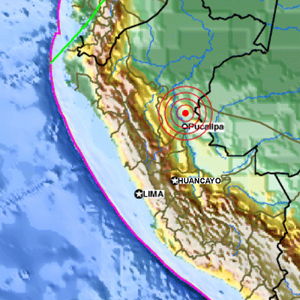
When the magnitude-7 earthquake hit the Peruvian rainforest at 12:49pm last Wednesday, I was alone and saw my laptop screen moving back and forth slightly. I thought it was nothing until I heard the picture frames rhythmically clanking against the wall behind me. The epicenter was around 250 miles away from where I live in the Andes and the earthquake’s effects reached Ecuador and Brazil. Nevertheless, it was a deep tremor that hit a sparsely populated area. There was limited damage.

Terremoto en el Perú 2011
The epicenter of the 2011 earthquake in Peru was in the rainforest around 250 miles away from Huancayo.
This is the first time I have ever felt an earthquake that lasted for more than a minute. A minute seems fleeting in the grand scheme of things, but it slows down and lasts an eternity when everything trembles around you. Not only are the objects around you on edge, but so are you.

As I researched for this blog post, I discovered that there were already three other earthquakes earlier this year in March and June ranging from 6.0 to 6.5 in magnitude. I wonder how many more there are to come. I wonder when it’s our turn after the devastating earthquakes in Haiti, Chile and Japan within the last 20 months.

I wonder if it was a warning that a magnitude-5.8 earthquake happened the day before at almost the exact time of day in Virginia on the eastern coast of the United States where earthquakes are rare.

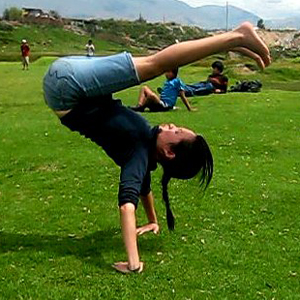
Acrobacias Samantha
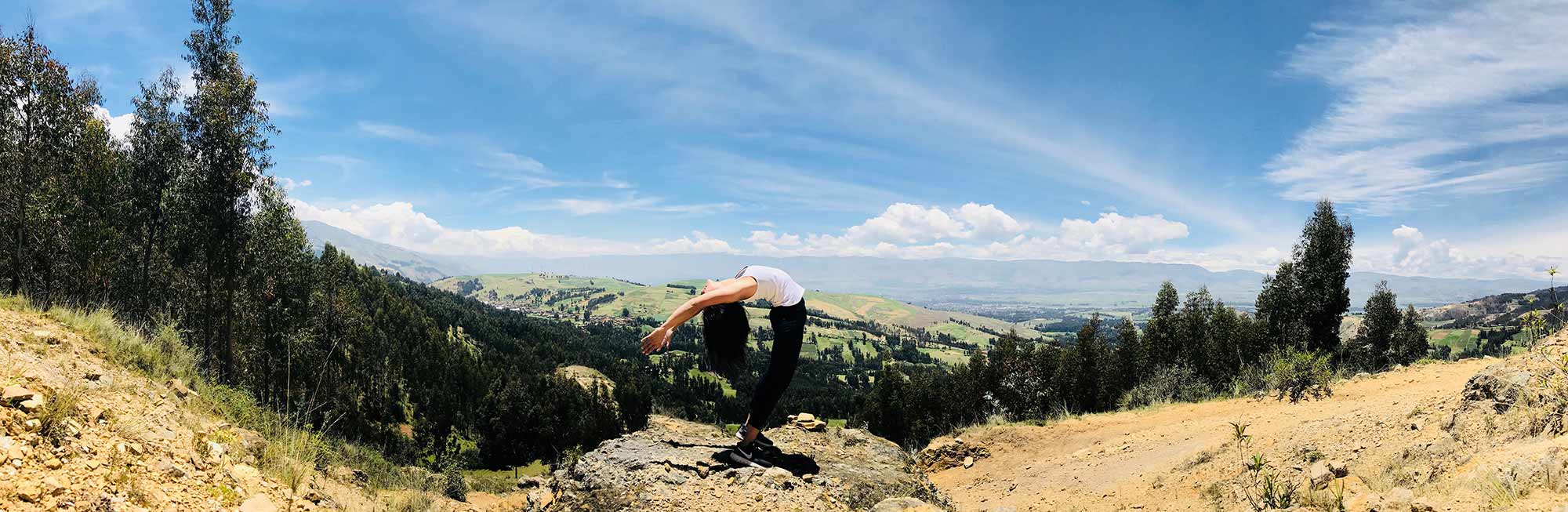
This is about the only slightly cool acrobatic-like move I've achieved in the last few months, but I know I can do more if I can sideswipe the fear.
I wonder if this is just the beginning and if Reinaldo Dos Santos, “The Prophet of America,” was right when he predicted that Peru would be subject to major natural disasters within the next eight years.

More importantly, I wonder what I will do before this is all over.

Before my world ends, I want to be more fearless (when I practice acrobatics), I want to let go of life’s little worries and frustrations more often (like if our bus doesn’t arrive on time) and I want to laugh more (especially at myself).

What commitment do you want to make before time runs out?

Last Friday, we were ready to leave for a short trip to Trujillo to start apartment hunting on the Peruvian coast. We woke up to news that day about avalanches blocking the central highway. The highway would be closed for five days and bus prices shot up from $3 to $30 per passenger as private cars offered to take people to Lima via detours and backroutes. I thought about all the people who would miss their flights, meetings, dates and precious time with their families.

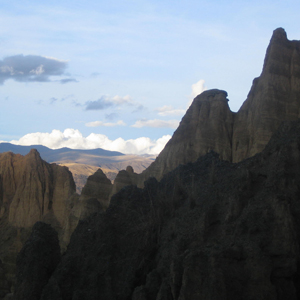
Los Andes Misteriosos
You never know what's going to happen to you in the mysterious Andes.
There’s no way to know what’s going to happen to you in Peru, especially when you travel.

On one overnight bus ride from Lima to Huancayo, we had chosen one of the more reputable bus companies to make sure we’d arrive safe and sound. Three hours from Lima, halfway to Huancayo, in the middle of nowhere in the Andes with no town in sight, there was a rebellion. I woke up groggily to realize that people were complaining about the bus stopping every half hour. It would stop for fifteen minutes each time. Someone explained that the motor was overheating and it was necessary for them to stop every half hour to splash it with water.

It was going to take forever to get to Huancayo. People shouted that they needed to arrive in time for work, that the bus should have called for backup as soon as they knew about the problem. We were locked in and passengers started banging on the windows, demanding to be let out.

When the driver finally unlocked the bus door, we all scrambled out to find that it was pitch dark outside and no one knew what to do but yell at the bus staff. We were lucky enough to flag down another bus on its way to Huancayo. They only took five of us and we had to sit on the floor in a little hallway behind the drivers. I arrived in Huancayo five hours later, freezing and with a major headache but thankful that we made it.

That’s what happens when things always go wrong — you remember to be grateful.

What went “wrong” this week and how can you turn that mishap into something to be grateful for?

Grandma Rosa loved celebrating Santiago, a Peruvian Andean tradition in honor of the Saint Santiago. When she passed away, she left behind six children and joined six other children who had passed away before her. In her honor and memory, the family and extended family reunite once a year to celebrate Santiago in her name with some family members coming in from as far away as Argentina and Italy.

Saludos en el Cementerio Durante el Santiago
Each person greets Grandma Rosa during Santiago.
Santiago celebrations officially begin on July 24th, but the fiestas can go as late as September. Traditionally, Santiago is celebrated on the farm in the company of your animals who chew coca and drink chicha as the humans do. In the city and for Grandma Rosa, the celebrations start with mass at the little chapel by the cemetery where she used to live.

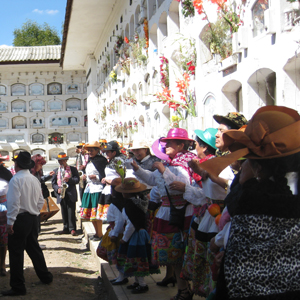
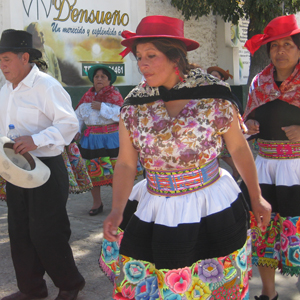
A full band accompanies the reunited family members as they dance from the chapel to Grandma Rosa’s grave, the men flanked on either side by two rows of ladies. They are headed by the great-aunts, the sisters of Grandma Rosa who exude a certain zest even in their eighties. It’s a sight to see them parading through the streets with the women fully clothed in colorful, traditional Santiago wear and the men raising their sombreros.

After filling her resting place with fresh flowers, each person greets Grandma Rosa by touching the glass that covers her tombstone and making the sign of the cross. Some say a little prayer, and then it’s off to the other side of the cemetery where her brother-in-law lays. Although the family only visits these two pavilions, the cemetery is actually filled with aunts, uncles, sons and daughters who have passed away.

Bailando Santiago en Huancayo
All the ladies don traditional Santiago wear.
The group dances their way up the street to an uncle’s home for breakfast and to catch up with each other’s lives. After all, this only happens once a year. Breakfast provides the energy to dance up a steep hill and everyone is rewarded with free beer at the first beer station, funded by another family member or friend. And the day goes on as such, the band following the family dancing from one beer station to another until lunch and then more beer stations until dinner. By evening, everyone is exhausted and completely drunk. What a satisfying day!

How do you commemorate loved ones past?

After a 27-hour bus ride to cross the Peru-Ecuador border to renew my visa, I really only spent two days in Guayaquil, the largest and apparently most dangerous city in Ecuador. What I’ll especially remember from those two days was my afternoon in Seminario Park.

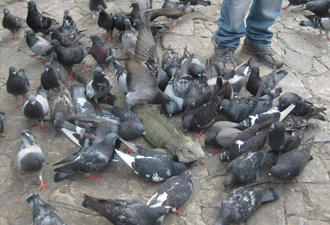
Aves Revoloteando a Una Iguana
This poor iguana is swarmed by birds when a kid throws birdseed on top of him.
Seminario Park dates back to the late 1600s when it was inaugurated as Guayaquil’s Plaza of Arms or main square over a century after it was founded by the Spanish conquistadors. It wasn’t until the late 1800s that they changed the name to Simón Bolívar Park after a statue was erected in his memory to commemorate independence from the Spanish. Only six years later in 1895, the park would make one final identity change when Manuel Suárez Seminario donated money to have the plaza fenced and renovated.

And now? Although it’s officially called Seminario Park, the signs at the entrance welcome you to Simón Bolívar Park and it’s best known by tourists and Guayaquileños alike as Iguana Park.

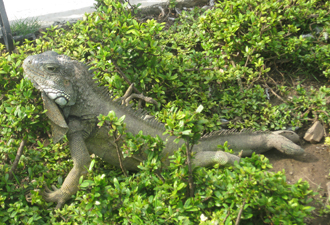
Cola de Iguana Cortada
This iguana's tail has seen better days at Guayaquil's Iguana Park.
I estimate that there are over 50 green iguanas living freely in that plaza. It seems like a peaceful existence as they laze about on trees, grassy patches or even on the park pathways. It’s indeed peaceful for a lizard until a kid throws bird food on you, so you’re swarmed by pigeons. And all those non-existent tails and tail stubs speak of children past who stepped on them or pulled them off.

Nevertheless, I interpreted the iguanas’ “laziness” as a zen-like take-life-as-it-comes attitude and imagined their dewlaps as beards, symbols of their grandfather-like wisdom. After all, what do they possibly do all day other than meditate and reflect on the grandness of life? That iguana underneath the flock of birds didn’t bat an eye at the sudden onset. There was patience there. So we put our thinking caps, sat on a park bench and lazed the afternoon away alongside those wise lizards.

Check out this video clip of our visit:

What has recently inspired you to stop and think?

If you’re considering a green iguana as a pet, I highly recommend Your Complete Iguana Survival Guide!

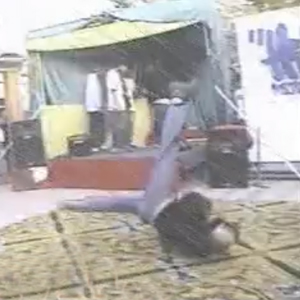
Pablo* was one of the strongest breakdancers in Huancayo. At the time, no one could do all of the acrobatics and tricks that he could do on the dance floor. Everyone knew his name and respected him.

Pablo Haciendo Breakdance en Huancayo
Pablo was one of the best breakdancers in Huancayo before he began to show symptoms of schizophrenia.
Pablo’s life changed overnight when on a morning like any other, he woke up with vacant eyes and a strange coldness in attitude. His brother described him as “untouchable.” He no longer recognized his family or friends. He began threatening everyone, paranoid that they were putting drugs or poison in his food. He was physically violent.

No one knew what to do with him. Some speculated that he was involved in witchcraft. When word got around the small town where he lived, the community concluded that this is what happens to people who take too many drugs. When I was introduced to Pablo in 2008, they told me to be careful around him because he was apparently a drug addict.

Pastillas
Pablo can live a normal life again if he continues to take medication every day.
They sent Pablo to the most reputable doctors in Lima, but he seemed to return to normal whenever he was outside of his comfort zone. The doctors sent him home within a few weeks of every hospitalization because he seemed fine. He wasn’t. His hallucinations that every plant was marijuana took over his conversations. His brother had to regularly reintroduce Pablo to all his old friends. His mother was at her wits end and wanted to throw him out on the streets.

Pablo’s last hope was a psychiatrist in Jauja, a city two hours away, but how could they bring him there when every effort resulted in rage and a flurry of flying fists? With pained hearts, Pablo’s father and brother fought back and physically forced him into the car. It was worth it. The psychiatrist diagnosed Pablo with schizophrenia and it was a relief to the family to know that it was inevitable; the drugs were only a detonator. He’s now stable under daily medication, helping babysit his niece and even expressing an interest to go back to school.

“The experience has taught me that you should look around you before you make decisions,” Pablo’s brother tells me with slight regret that he went off to Lima on his own in his younger years. The two were inseparable, the best of friends, and Pablo was forced to find a new group when his brother left; unfortunately, Pablo got involved with the wrong crowd.

*Name changed to protect the person’s identity.

Have you ever regretted a choice you made because you thought of yourself instead of others?

What has been your experience with mental disabilities? Do they scare you? Are you curious about them? Do you feel compassion? Are they a normal part of life for you?

Peru is a country of tradition, so there’s often a fiasco when someone breaks the norms. Overcoming the prejudices takes self-confidence and a strong belief in oneself. Ana tells us about her experiences and how she faces the discrimination.

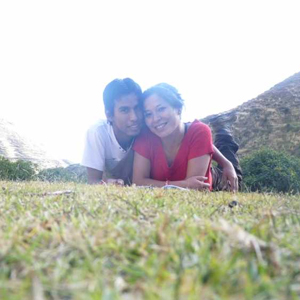
Ana y Deiby
Ana's family and friends give her a hard time about her relationship with Deiby, seven years her junior.
Ana Santillán Muñoz is 31 years old and has made a name for herself as an architect and the president of an NGO, gaining the respect of her peers and employees despite being a young female in positions of power, a not-so-common phenomenon in the Central Andes. Now she faces the jury of social norms once again concerning her long-term relationship with Deiby, seven years her junior. “The hardest part about it has been the prejudices, not only because I’m older, but also because I have more studies behind me and already have an established life,” she explains. “I have a role in society and others have a hard time dealing with me mixing roles.”

They’ve been together for almost a year, yet Ana’s family and friends continue to show their disapproval. Most of the time she reacts in silence or doesn’t pay attention to what others say; other times, she defends herself by reminding the critics that it’s her life. “It’s most difficult with my family because their opinion matters to me,” she explains. “But in time, they’ll see that I’m happy.”

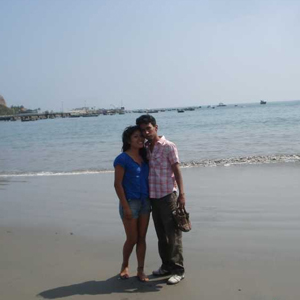
Ana y Deiby en la Playa
Ana's relationship with Deiby has changed her.
The relationship has changed her. “I’ve never been the housewife type,” Ana admits, but now she cooks, does laundry and shops for groceries. “I saw myself in the mirror the other day at the supermarket and wondered what had happened,” she jokes. In the past, she imagined herself traveling all over the world and never saw the need for a house, but now she wants to settle down in Huancayo and have her own space with her partner. In fact, she’s even thinking about having children.

Her advice for people in a similar situation? Have patience and tolerance. “As women, we want to solve things,” she reflects. “But you can’t ‘fix’ another person.” Ana also notes that she and Deiby are the best of friends. “It’s less scary to say the difficult things if your relationship is also based on a friendship.”

How have you been different from the norm and how did you face the ensuing challenges?

P.S. This post was scheduled — I’m still traveling and I’ll be back by early next week! I promise to respond to comments and give love to your blogs when I return! =)

Last week, I met with a recent architecture grad who has a passion for urban planning. He spoke of how Huancayo has been haphazardly put together because the developers, who have the money, always win out over the planners.

Huancayo Apretado
Huancayo is a cramped city, but living close to each other encourages us to socialize.
Dr. Joan Meyers-Levy of the University of Minnesota published a 2007 study in the Journal of Consumer Research on the effects of ceiling height. She found that high ceilings promote freer and more abstract thinking while people in a room with lower ceilings tend to focus on the specifics.

My architect friend suspects that a similar phenomenon happens with cities that feel large and spacious versus smaller, cramped cities like Huancayo. On the positive side, the narrow Huancayo streets encourage residents to be more sociable. Two other elements encourage community interaction:

  1. There are two centrally situated plazas, pleasantly designed with pockets of green and fountains, where people often meet, relax and chat. They hold a flag-raising ceremony and parade every Sunday morning at the main plaza.
  2. One of the principal streets is closed to traffic every Sunday for a 16-block fair with vendors coming in to the city from all the surrounding towns.

What does your environment bring out of its residents and how?

P.S. I’m heading to Ecuador for a 2-week trip to renew my visa. I promise to respond to comments and hit up your blogs when I get back! =)

Pilsen's Día del Amigo en Perú

Every first Saturday of July is the “Día del Amigo” (Friend’s Day) in Peru. The concept was implemented just two years ago by a national beer company, Pilsen Callao, probably as a gimmick to sell more beer.

They’ve been promoting it as a day to celebrate friendship with old buddies you haven’t seen in a while. “We’ll remember the anecdotes, the laughs and the good times that we spent,” they advertise.

The slogan of this year’s Pilsen Friend’s Day commercial is: “True friends are always there for you. That’s why, on Friend’s Day, you need to be there.”

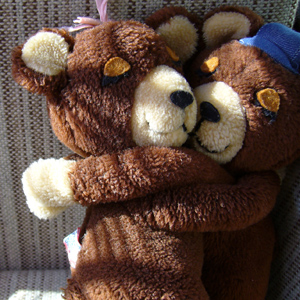
Abrazo de Oso
This bear hug is for you!
Despite the connotation with beer, I appreciate the reminder to value my friendships and in honor of Friend’s Day, I want to thank all of you for your friendship! I can’t thank you enough for reflecting with me, for the conversation, for the support through the tough moments, for caring about me and for just being a part of my life. This bear hug is for you!

I also want to recognize an online friend who has made a difference in my life this past week. Carolyn Nicander Mohr has been a true friend to me in recent days, taking time out of summer fun with her family to check in and see how I was doing after a string of health issues. Check out her blog on everything tech, accessible to everyone from the lovers to haters at Wonder of Tech!

In the spirit of Friend’s Day, I’d love to hear about one friend you’d like to recognize who has positively impacted your life in the past week!

Copyright © 2026 Samantha Bangayan | Sitemap | Disclosure Policy | Comment & Privacy Policy
All articles and photos in this blog are licensed under the Creative Commons Attribution License CC BY-NC-ND 3.0.