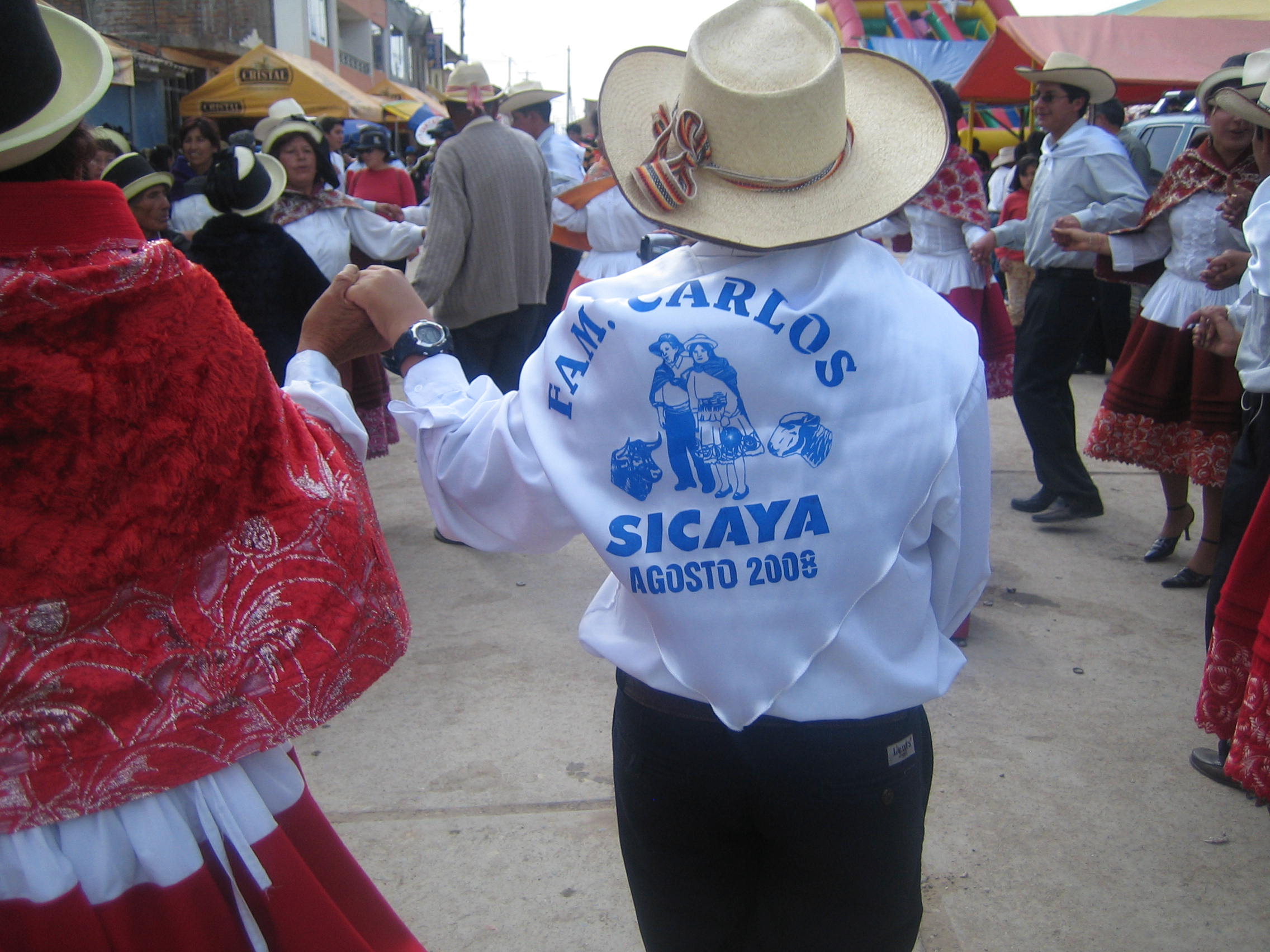
I was just a part of the biggest and craziest fiesta that I have ever been to in my life! Families and friends come together from all over Peru at this time of the year to Sicaya (a town just outside of Huancayo) to celebrate the pachamama (mother earth). There were hundreds of people, shoulder-to-shoulder packed, mostly dressed in traditional Peruvian garb, pouring beer for each other, and dancing away. Each family proudly wears scarves around their neck etched with their family name and have their own band with 12-15 saxophonists, clarinet players, a harpist, and drummers.
These scarves distinguish different families, so you can find your family members within the chaos.The tradition is to make your best offering to the pachamama first, whether it’s throwing coca leaves or pouring your beer on the ground before passing the cup around to everyone and anyone else. Afterwards, the family holds hands and dances in a circle or parades through the streets of Sicaya, but they’re never an exclusive bunch – Jaap, Dorien, Ruth, and I were recruited to join the dancing and the festivities over and over again as we walked through the plaza! And the party’s not over yet! It’s still going on right now and we may even hit up Sicaya again Monday evening for the castellones (fireworks). =)
Maria and I shared pachamanca for lunch – a traditional Peruvian dish and very fitting for the occasion. They throw layers and layers of food to be cooked in a hole in the ground. Our pachamanca had green beans, spiced pork, beef, and humita (a sweet corn tamale).
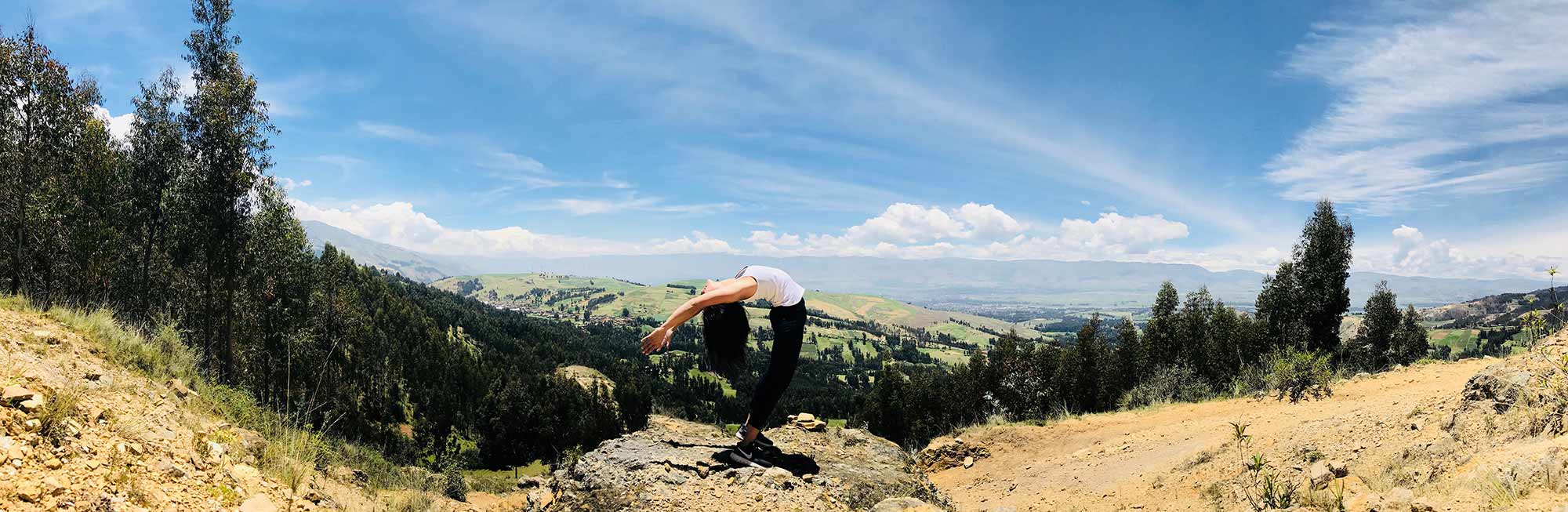
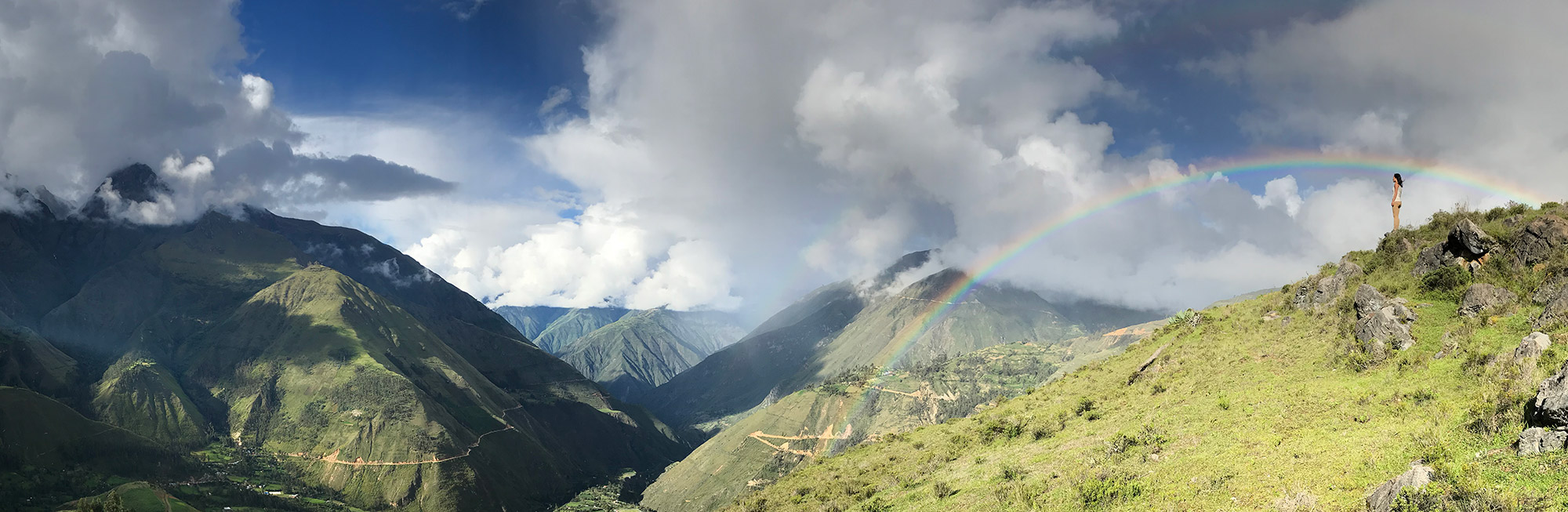
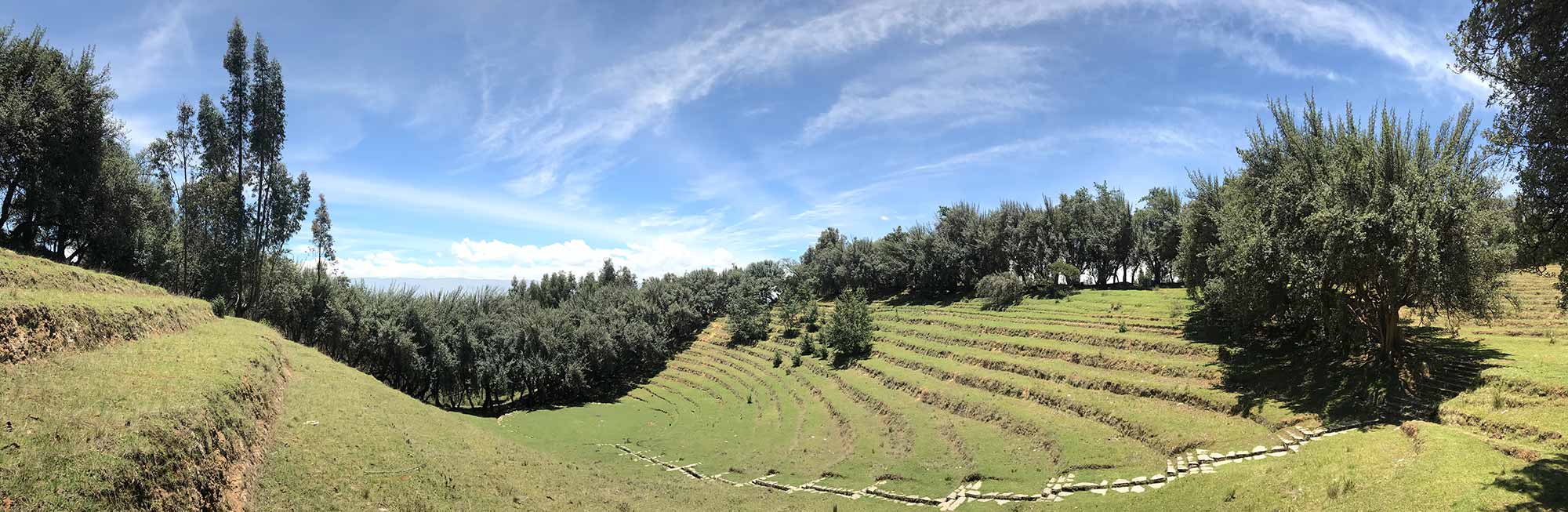
Later in the afternoon, we explored the farmlands in the outskirts of Sicaya. We chatted with a family in the midst of building their own home – they had found prime earth to mix with straw to make adobe bricks, the construction material of choice in this region. We then continued on into the currently abandoned farmlands and found ourselves truly aware of our presence in the Mantaro Valley surrounded by the Andes mountains every direction we turned. We trekked up and down dirt hills, leaped across little rivers, ran through rows and rows of tall dried grass, remembering pachamama.
A good friend e-mailed and asked: ” What has been the biggest culture shock that you have experienced so far?” and I had to think about that one…
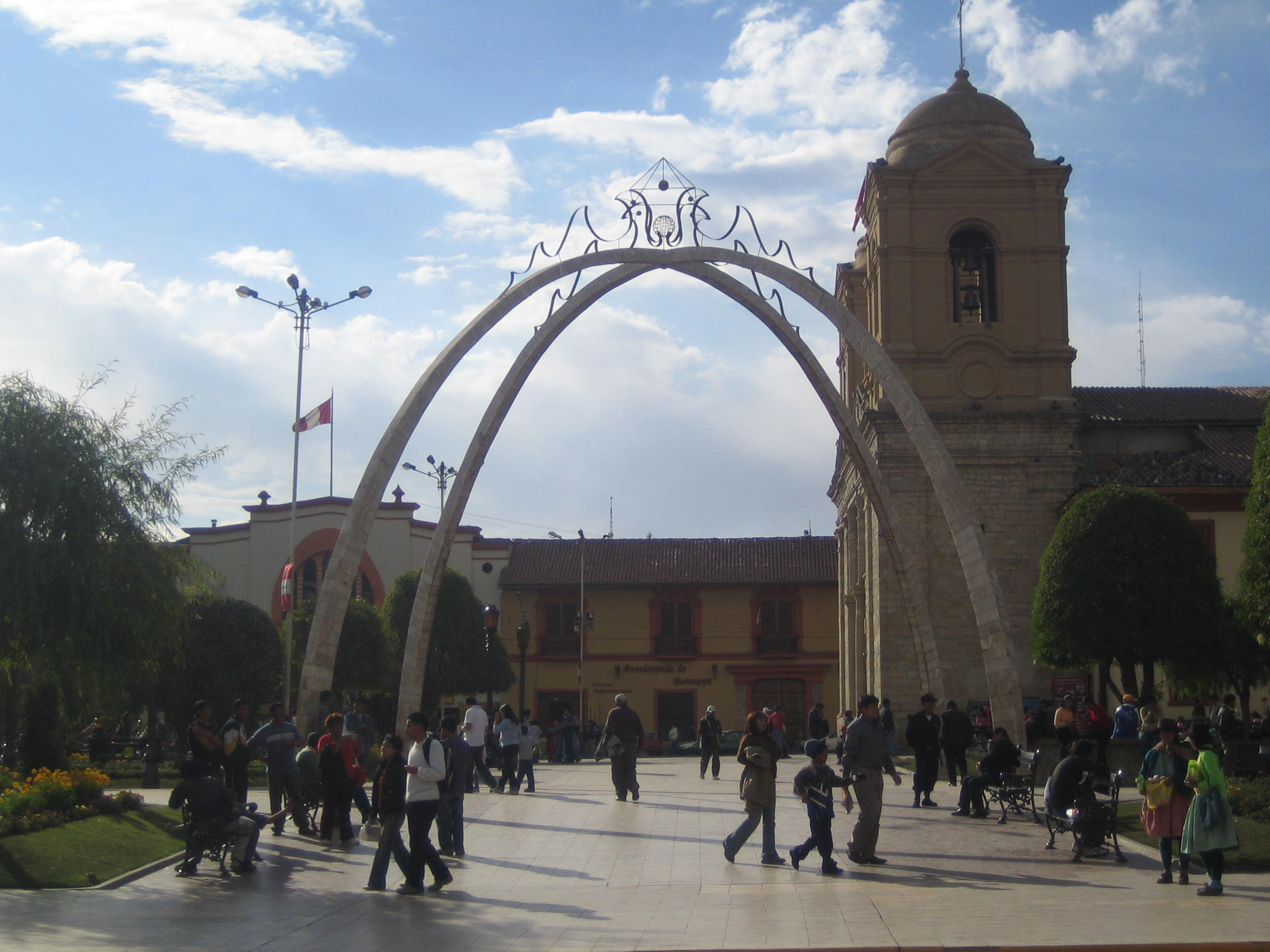
The grand ark in the main plaza of Huancayo.I have to admit that I first tried to address “culture shock” in terms of trauma and anxiety – and I’ve had my share of struggles! – but really, the biggest “shock” in moving here has been very positive. I would say I’ve been most pleasantly surprised by the wealth of culture and history here. Being in the Central Andes gives me access to the Inca civilization at its core (e.g., one of the main streets through the city was once part of the Inca trail), but I also love the diversity here from Peru’s rich history before and after the Incas and from the country’s geography – the Andes seem to be like a mixing pot as the sierra is flanked by the coast to the west of Peru and the Amazon rainforest to the east. Many of the people here in Huancayo, for example, consider themselves mestizo (of mixed descent). Not to mention all the people who look like gringos (foreigners) to me, but are actually Peruvians descended from the Spanish, and all the Chinese and Japanese looking-people who have also lived here for generations. In fact, Rik, the director of my NGO, is in the Amazon right now visiting a rural community whose members all have blonde hair because their ancestors came from Germany centuries ago!
I’m ashamed to say that if I had done more research on Peru and South America, this culture shock would probably have been much less potent. At the same time, because I’m jumping with a near-blank slate, I’ve noticed that my eyes are open a lot wider, my attitude is fresher, and I’ve been able to connect more with so many people who are excited to teach me about their country (the Huancainos are so friendly!)
The Plaza Constitución is only a couple blocks away from the apartment and I love sitting there, in the centre of the city, seeing people come and go, imagining their stories. And I think of how lucky I am to be here and how my own story is unfolding.
Here, in Huancayo, I am La China (pronounced chee-na), the Chinese Girl. There is yet to be a day that I haven’t overheard others talking about me as China or Chinita. It is my new Peruvian identity. I later learn that this new recognition isn’t necessarily special treatment – any Peruvian with small eyes is called “chino” and for a relatively small city, they seem to have a lot of Chifas (Peruvian-style Chinese restaurants)! I’m kind of glad I’m not a novelty.
The children from the daycare line up to parade through the market.Maria and I have an apartment on the top floor of an office building in the middle of downtown – I like to think of it as a penthouse though it’s a little rough around the edges. It’s entirely furnished though the furniture is aging and mismatched, green carpet in one room, almost all of kitchen chairs have lost a spring, greasy gas stove. Every three showers (jumping in and out of scalding hot water) the fuse blows and it’s the old school kind of fuse that we have to screw in each time. My favourite part of the place is the huge terrace where we can soak up the sun, hang our laundry, and where I would do yoga if there weren’t school kids popping their heads out the windows in the building across the street. The place has character.
Huancayo is up in the Central Andes, over 3000m above sea level. I was expecting some altitude sickness, but had little difficulty adjusting – I feel winded every time I climb up the four flights of stairs to our penthouse, but that may be more a measure of my poor fitness. The air is polluted and the atmosphere is dry here – they don’t expect any rain until September at the earliest. It’s usually sunny and hot during the day and cold at night, but not much worse than fall in Vancouver. I can go out in shorts and a jacket, but people find that weird because they consider this their “winter.” There is real poverty everywhere I turn. Huancayo opened its first supermarket (e.g. a Walmart-like everything store) just last week; otherwise, the streets are mostly filled with little family-owned shops or street vendors on the sidewalks. I’ve been practicing my skill of dodging cars, people, and dogs as the sidewalks are small or non-existent and there is no such thing as a pedestrian crossing.
It’s day 3 in Huancayo and we already have practically a weeklong vacation. It’s Fiestas Patrias on Monday and the city basically shuts down for at least a week to celebrate Peru’s largest national holiday, its independence day. Viva el Peru!
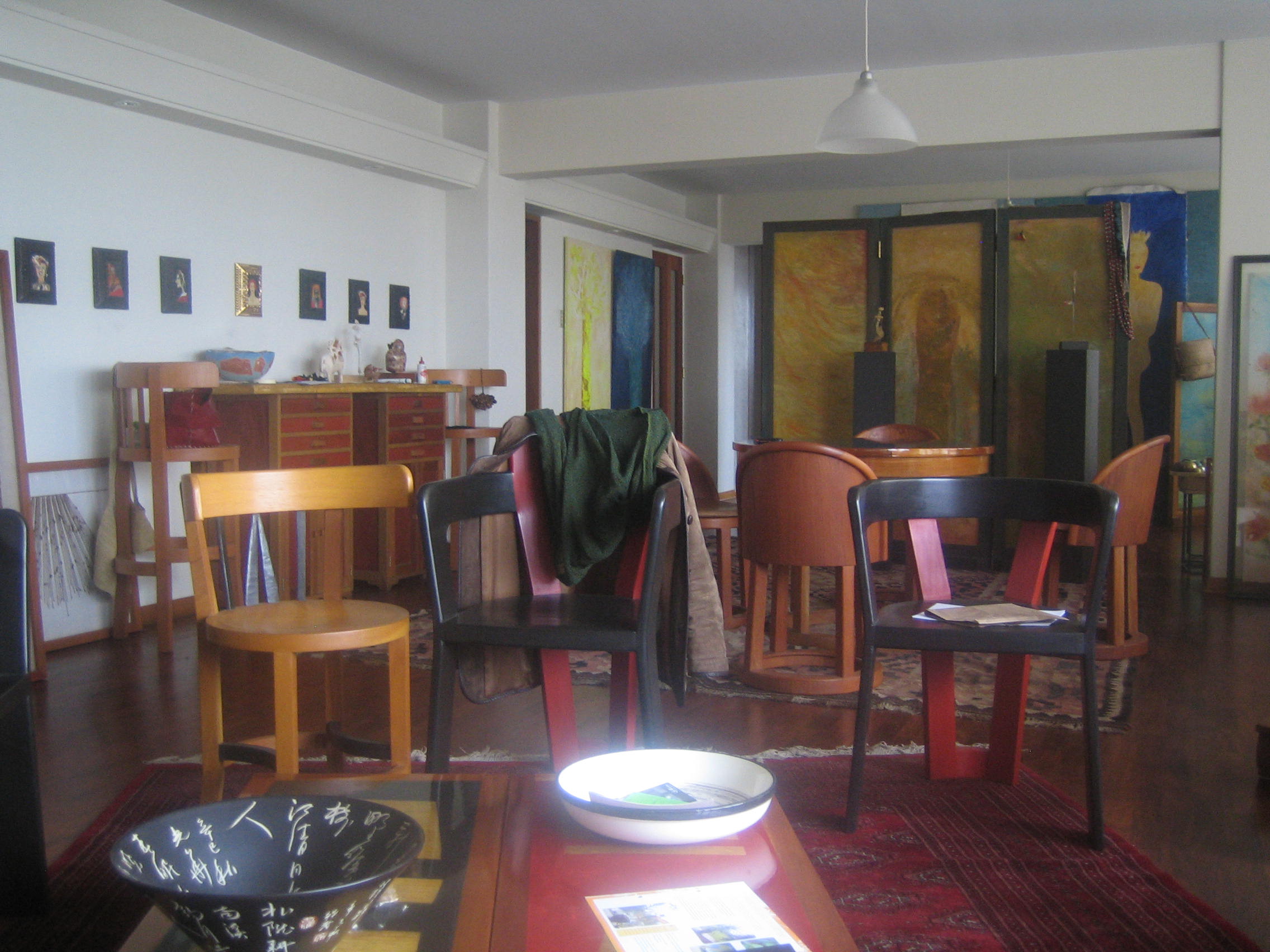
My first taste of Peru is through the eyes of Andita – a well-known artist when she lived in France and Germany. She is the cousin of Maria’s mother who was kind enough to welcome Maria and me into her apartment for the two nights we needed to stay in Lima before taking the bus up to Huancayo. Her apartment is an open space filled with paintings, ceramics, prints, and furniture that she has designed, but also tidbits of la cultura peruana (Peruvian culture; gourds with histories finely etched on their surfaces, paintbrushes made out of hair like mine, an enormous tree trunk hollowed out in a certain way and used as a communication device by the aguarunas in ancient times). Every piece is handmade, unique and to Andita, it is why each is so beautiful.
Andita's apartment became the inspiration for my entire stay in Peru.Andita is so full of personality; it is seen through her apartment and through the way she lives life. Maria and I spent the day wrapping several dollars worth of Nuevo Soles (the peruano currency) in paper, labelling them with names and the little villages to which they are being sent through the next man who will take the three-day venture to the rainforest. The money is for the ceramics they have sold here in Lima, really the only “city” in Peru, Andita tells us (because the next largest city is at least an eighth of the size of Lima and can’t even really even be called a “city.”) Andita has been helping the aguarunas of three small rainforest villages rediscover their talent and skill in ceramic design and show them how they can use this skill for their livelihood. The rest of her time…well, it’s difficult to say what she does the rest of the time because she does what her heart desires. She has been an interior decorator for a small upscale cafe in Miraflores, she sells her ceramic creations that she makes in Colombia, and custom designs furniture.
On our last day in Lima, Andita shared a bit of her life history, a story of taking all the random and spontaneous opportunities that life presents us. And as difficult as these coming six months might be for me immersed in a new environment, a completely foreign culture, I’m so glad that I walked through that open door of opportunity, got on the plane and am now sitting in the Peruvian sun.
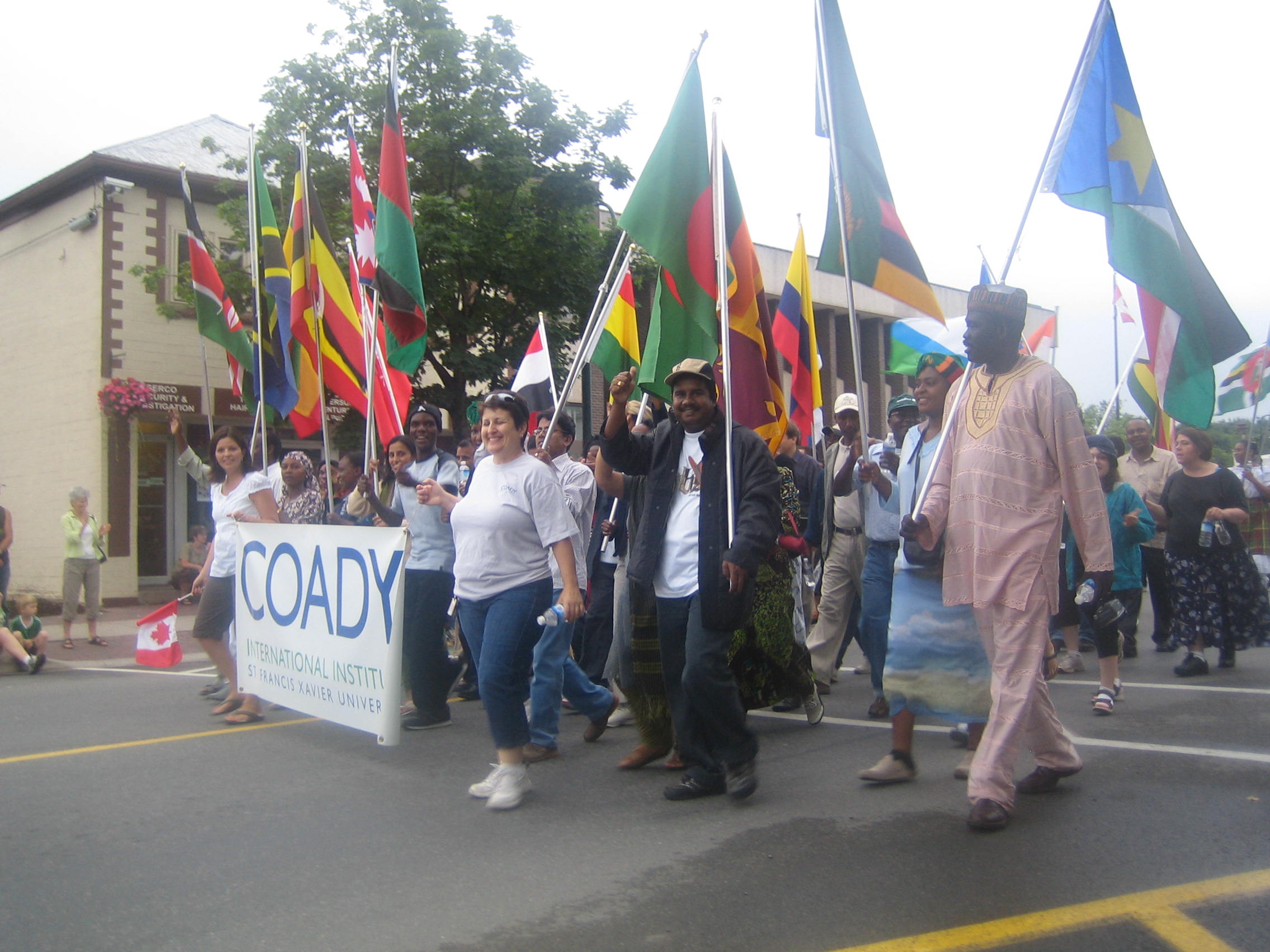
It’s the weekend of the Antigonish Highland Games. I ran the kick-off 5 miler on Friday (excellent idea to get the fire fighters to spray the runners), took part in the Grand Street Parade, waving to the town of Antigonish with all the Diploma participants yesterday (I have never in my life heard so much bag-piping), and admired the big burly men in kilts today.
Coady students paraded through the streets of Antigonish in style.My favourite event was the 15-minute Tug-o-War! It was amazing to see the strategies they used, how coordinated the young men were, and how crazy the coaches can be! =)
I leave for Peru tomorrow morning. I am scared and anxious yet excited and hopeful. We’ll see where the road takes me from here. =) Wish me luck!
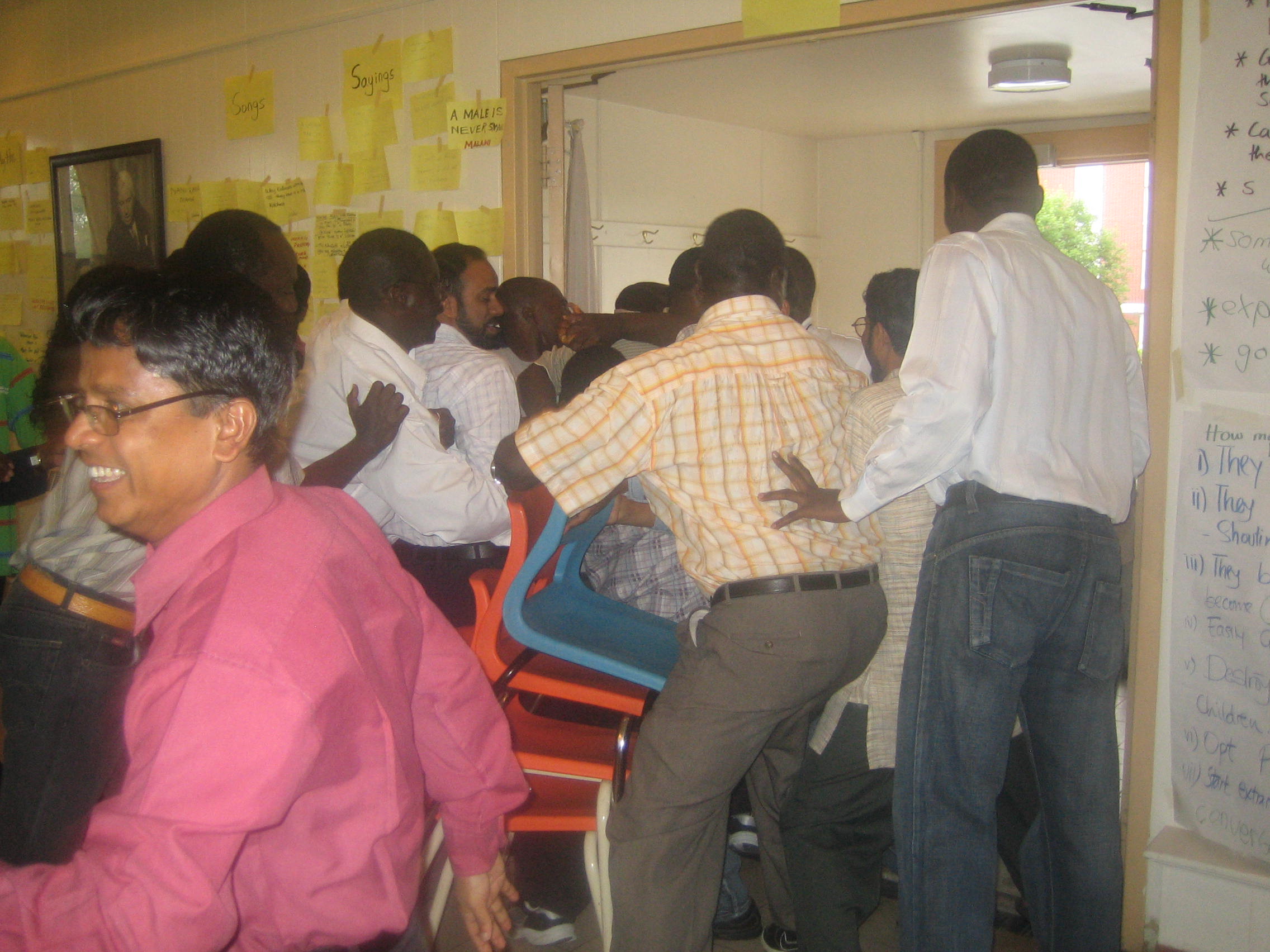
Earlier in the week, we did an exercise on conflict. The class was divided into three groups – one was instructed to put all the chairs by the door, another was instructed to put all the chairs by the window at the opposite end of the room, and the last group was instructed to put all the chairs in a circle. Simple exercise, right? It was interesting to see how the group transformed – people were shoved out of their chairs or dragged across the room, some teamed up, and others were sneaky and waited to catch people off guard. The chairs had become more important than the people. Four observations from the group dynamic and the discussion afterwards: People got a lot rougher than we all expected.
The group that found itself with the most chairs (the “door” group) were the least likely to come to a compromise. In fact they didn’t even consider any kind of negotiation. Even when the “window” group brought all their chairs over to try to strike up some kind of deal, the “door” group refused to entertain any type of interaction. In their eyes, they had the most resources and therefore were the “winners.”
Gilo from South Sudan – one of the tallest and biggest guys of the group – noticed that many in his group were relying on him to hold down the most chairs or at least the chair he was sitting on, but he was also dragged off in the end and his chair was eventually stolen. From that experience, he pointed out how dialogue would have brought about more positive change than size and power.
Hellen from Uganda held back because the scene immediately reminded her of incidents back home when the government distributes soap or sugar. The scenario was always the same – a mad scramble, each person for himself or herself, children getting trampled. Olga, the facilitator, also mentioned that when they conducted the same exercise years back, the two Diploma participants who were there from Iraq left the room as soon as the chaos started. They later explained that they see the same chaos back home every day and they have learned to protect themselves by removing themselves from the situation.
I reflected on how I acted during the exercise. At first, I tried to conspire with another team member and steal some chairs, but I mostly held back as chair legs were being dangerously flung into the air. Krista came up with the idea to let all the groups succeed – by helping each other achieve each group’s goal in turn, first bringing the chairs to the door, then the window, then put them in a circle. I helped yell to get everyone to listen to Krista, but after she proposed the idea to the most people that would listen, I was surprised that nobody took action. They pretty much just went back to what they were doing!
A few nights ago, I lay in bed dripping with sweat in the sweltering heat of my enclosed bedroom – my thermostat said it was 31 degrees. I tossed and turned and tossed and turned and could not sleep. This is very rare for me. I’m usually an excellent sleeper – my body knows to sleep through what it needs to, but I can also be perky as soon as it’s time for me to wake up. I had to wake up at 2am last night and air my room out for an hour. Ironically, that afternoon, there was torrential rain.
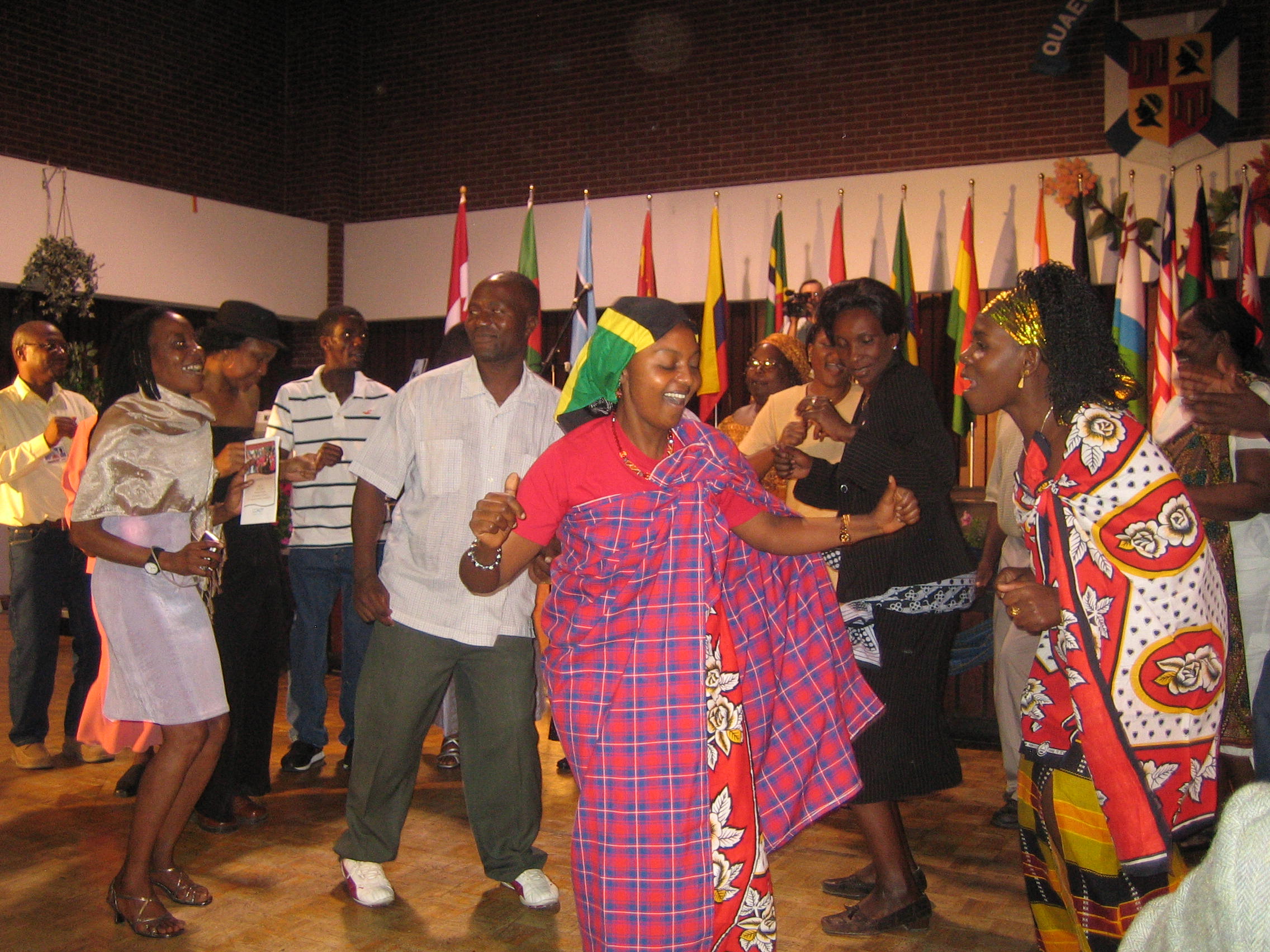
The ladies from Tanzania knew how to start the party.Thomas (affectionately known as “Dr. Peace”) led an insightful half-day workshop on racism the other morning. It’s funny because I was constantly telling others about Vancouver’s multiculturalism when I was in Japan, but the simple fact that Canada is a country of immigrants doesn’t mean that we’re any less segregated or any more tolerant than the next person. Brittany (one of the other interns) commented that she was surprised at some of the blatant discriminatory comments she would hear from some of her friends in Vancouver when she was on the West Coast for an internship. Her friend made a face at her for buying something from the Richmond night market and it’s true that sometimes Caucasians are viewed differently if they spend too much time participating in Vancouver’s Asian culture or with Asians. Our typical language is filled with labels – “chugs,” “FOBs,” “brown,” and it’s common for us to chill with people from our own ethnic circles (my sister vouched for that, especially based on the cultural environment in high school).
It’s also important, though, that I point out what I learned about the difference between racism and discrimination. As Dr. Peace put it, racism is discrimination + power. It’s discriminating against another ethnic group for the purpose of exerting one’s power or superiority over that group. I think both are present in Vancouver.
Maria and I had the chance to meet with Julie, one of Tara’s past interns, a couple days ago who left us with several pointers.
Expect vicious dogs roaming the streets of Huancayo. If I’m alone, the best way to deal with them is to make like I’m going to pick up a large rock and hope that I don’t actually have to throw it.
I’ll have to deal with the machismo culture – still not sure what to expect in terms of this.
Some of the Peruvians in the more rural communities think that foreigners steal children and use their fat to grease railroad tracks. (!!!) Establishing that trust-based relationship will be really important.
The other day, Sophia from Tanzania nonchalantly commented that I seemed to be gaining weight (I have been eating a lot of pastries lately – I’ve gotta take advantage of this buffet!) What’s so great is that fat really is beautiful where she comes from. If only I was going to Africa. =)
I’m going to church today for the first time in years. The ladies from various countries in Africa promised that we would be clapping, singing, and dancing like they did during the Welcome Social night and I’m always up for that!
Today I felt like I was emitting sweat droplets from every single pore of my body all day long. I felt like this yesterday too. Because of the incessant sweat, I’m also getting hives all over, not only when I’m out and about in the pollen-ified air, but also just sitting, unmoving indoors. Imagine a stuffy room, the body heat of over fifty perspiring humans, and the accompanying stench (or so I’ve been told – this is when I feel grateful that my sense of smell is so poor). I am a sticky monster.
Today I had a big breakfast, three slices of pizza, a few slices of cake, cookies, and scoops and scoops and scoops of ice cream (with chunks of white chocolate goodness). I need to cooldown somehow. This is all for free through my meal plan. I now fully understand where the “freshman 15” comes from. I am a belly.
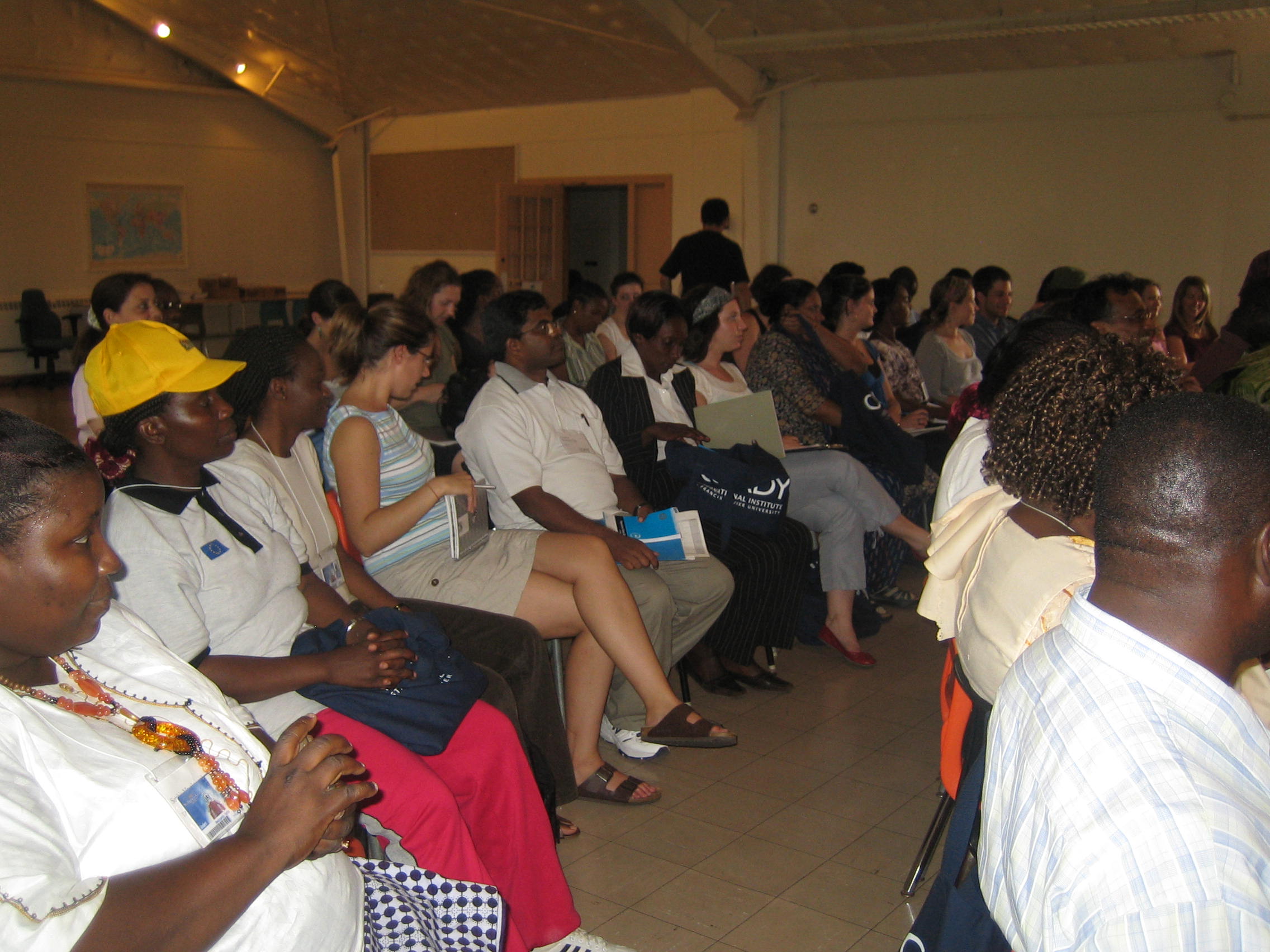
We’ve officially had three full days of courses with the Coady Diploma Participants and two weeks more to come. I have to admit that I was ready to write-off the whole course after the first day of classes – some of the participants didn’t vibe with the participatory teaching style (i.e. a lot of small group discussions and energizers) – there was a lot of interrupting, and there also seemed to be a language barrier. That all started to change, though, as we all became more comfortable with each other and began discussing issues more relevant to the participants’ backgrounds and interests in community development.
Getting in the mode to learn.Olga (one of the facilitators) gave a really good example demonstrating the consequences of paternalistic donor-driven projects and the difference between felt and ascribed needs. In this case, the donor was providing funding for a goat project in Nepal. They intended to distribute pairs of goats to families in rural communities in Nepal to breed as a source of income. But these families didn’t want goats! In fact, they saw these goats as an extra burden, especially when they already had to travel long distances to get water for the family members, let alone the goats. Not surprisingly, they later found that all the goats had been eaten. =P
It’s like how Berin was telling us about the forest communities in Nepal. NGOs thought they were “helping” these communities, by transferring them to the city, until they found the people back in the forest some time later. Fred made the argument that sometimes people don’t know what they need, at which time the donor may be justified in intervening. He had worked in Somalia during a large famine and the people felt that they needed food, of course. But just giving away food wasn’t sustainable, so the Food for Work program was implemented – food was given in exchange for human capital so that canals were built to harness water and roads were built for better access to rural areas. Imagine me nodding my head at this time, vibing with Fred’s wisdom, until Olga brought us back to the idea of giving these people a sense of ownership. The way the Food for Work program was employed perpetuated paternalism and dependency. A better approach would be to increase the people’s awareness of other possibilities and educate them so that they discover for themselves what they really need and what can be done.
Before I left for Antigonish, Dana and Mary (coordinators of BC’s infant development program) talked a lot about empowering the mothers that I’ll be working with in Peru. I’ve learned from Crystal that a better term might be “capacity building” or “capacity strengthening” which acknowledges that these moms already have the capacity to be excellent mothers, whereas “empowering” implies that these moms are empty and need to be instilled with the power or capacity to be. I like to also remind myself that I am exactly where I need to be right now, doing exactly what I need to do, and that I have just what I need to do these things…to absorb all this knowledge, to learn Spanish (almost from scratch), to get up every day and go for a run, to manage my time well (despite a string of 8am-8pm days with extra Tara sessions), to just be really human.
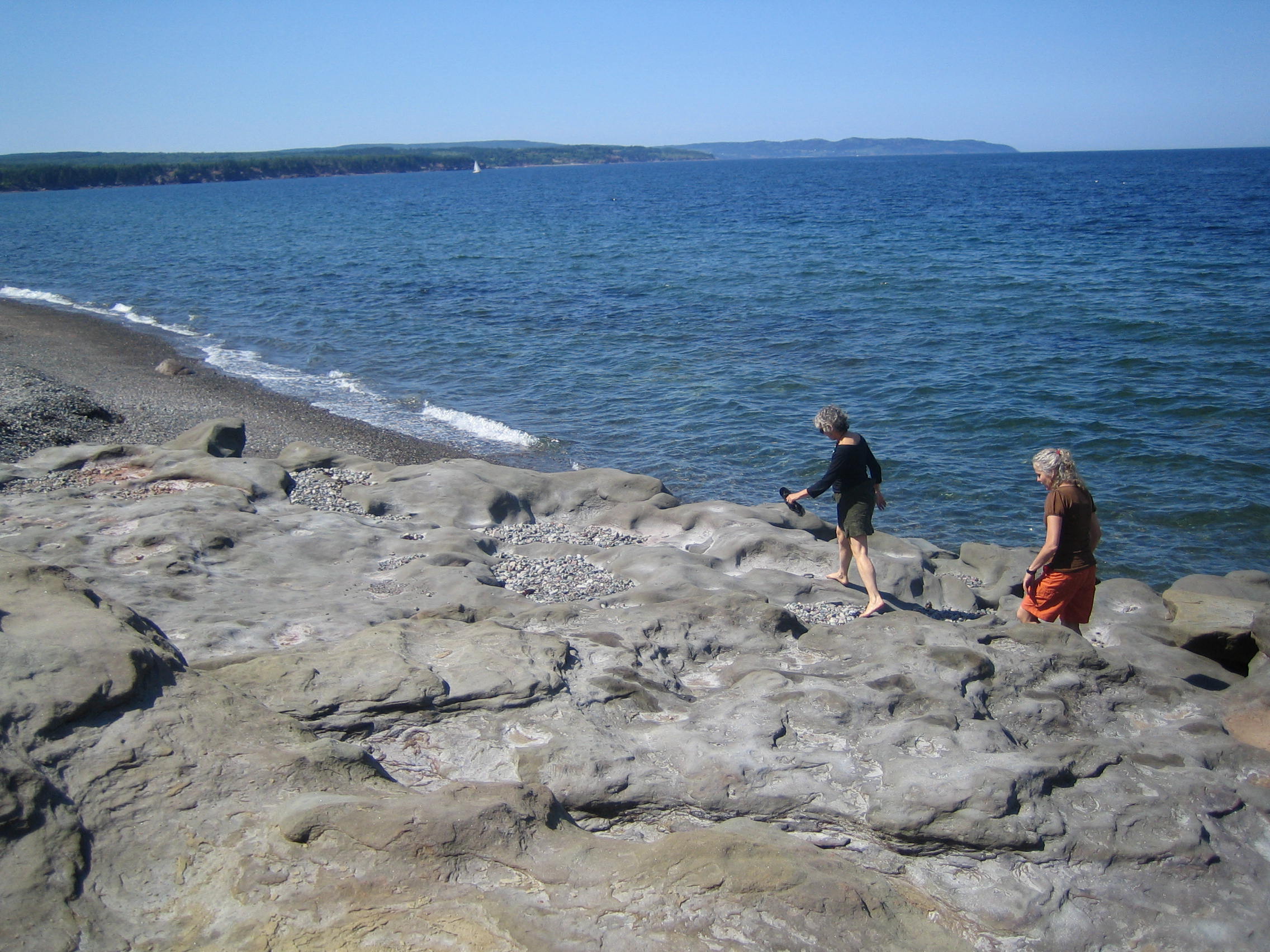
I accidentally popped my blister yesterday, which turned out to be the worst time to pop it because Tara took us down to the beach after our day-long workshop on infant development, but in order to get down to the oceanside we had to traverse dirt, grass, and mud downhill.
An afternoon of relaxation and exploration at Cribbon's Point.I tried to keep my flip flops on, but found myself slipping around everywhere (especially when we got to the mud). Thankfully, my blister doesn’t seem to be infected – although Tara did warn us to keep our feet protected when we get to Huancayo as it’ll be a whole different bacteria-infested story over there. Go GoreTex runners!
I love how human and down-to-earth (literally) Tara is. I like to think that I’m outdoorsy, but there I was, a little squirmy about getting my feet in the mud for no more than two minutes. We’ll see how I fare trekking through the Central Andes.