A good friend of mine lent me his Teaching Company DVD on the Conquest of the Americas. The professor, Dr. Marshall C. Eakin, is talking about the key factors that led to European expansion and eventual colonization of the Americas – political centralization, economic dynamism (capitalism, trading), technology (ship features, astronomy, math), and culture/mentality.

This last factor was the most complex and the most interesting to me. It encompasses the development of modern science (the world should be manipulated and dominated) and the role of religion (aggressive evangelism). It became clear that it wasn’t only science promoting the premise that the natural world was ours to understand, when Dr. Eakin quoted Genesis 1:28 – “Be fruitful and multiply and replenish the earth and subdue it and have dominion over it.”

Both science and religion also follow a linear and progressive worldview. There is a beginning and an end, a strong belief in cause-and-effect. It’s the notion of being on a path and that one will finally get “there.” In fact, I can see how this kind of uni-directional point of view permeates many (all?) different fields and ways of knowing. It’s at least one way of understanding what’s behind these ideas: that I achieve by setting excellent goals, success = completion, the drive for “conquering” or “finishing”, or that it’s possible to have the “answer(s)”.

Dr. Eakin contrasted this with the cyclical and seasonal worldview of Asians, Africans, and Native Americans, at least at the time. Their focus was on recurring patterns, balance between different factors, and fluidity. It was less time-oriented and they valued intuition.

It’s why the idea of living and learning in another country is so appealing to me. Of course, I learn the language as best as I can and I learn about the customs and traditions, but beyond that I absorb an entirely new way of being that affects how people express themselves, how decisions are made, how relationships function, and so much more.
Sometimes I forget that I don’t even need to travel outside of my own city to experience language barriers and misunderstandings. What’s beautiful is to be reminded that there’s more to communication than language.

I’m sitting at the bus stop when an old, petite lady sets her bags down on the bench with me. She stays standing. I’m in a good mood and strike up a conversation.

“That will be heavy to carry home.”

“No,” she says shaking her head as if it’s no big deal. She says a few more words – some incomprehensible – but I get the picture that she doesn’t have far to walk. I’m a little surprised that I can’t understand her because she looks European, if not Canadian. I figure I just didn’t hear properly.

“How many blocks do you have to walk?”

“One and a half.”

There is some silence and the conversation seems over.

“You’re Filipino?” she suddenly says. Now, this is surprising. No one ever guesses I have even the slightest Filipino blood – Chinese probably, Korean or Japanese maybe, but never Filipino, never without having seen my last name, and never in Vancouver – a city that boasts(?) the largest proportion of Chinese in Canada.

“Yes! How did you know?” I ask.

She begins to regale me with a story that I continue to not understand. I know she’s speaking English because some words come out loud and clear and she nods firmly after every few sentences, her body language exuding confidence as if I should be following everything she says. I’m trying hard to.

“Five days.”
“Millionaire.”
“Filipino.”

I’m nodding and saying, “Yeah,” intermittently as I collect clues on what she’s talking about. It’s as if we’re actually having a conversation. She convinces me that we are with the way she’s speaking to me – no hesitation, no pauses, no doubts, no verification questions (“Right?” “You know?”) I try to change the subject because I finally realize that she’s talking in circles…I think.

“What language do you speak?” I ask.

“Yes!” she says confidently with a sharp downward turn of the head. I almost forget what question I had and nod in agreement with her.

I try again.

“You speak another language?”

“I speak English.”

I try other ways of asking the question.

“I am Greek.” Oh, that explains it – or does it? I continue to be naïve about the stereotypes of different countries and cultures. I consider my naivete one of my greatest strengths.

The lady is eating an ice cream bar with a purpose.

“Greek-Canadian,” she confirms.

The bus is coming so we both get up and I offer to help her with her bags. There are a lot of senior citizens in my neighbourhood and I often help old ladies carry their bags home. This lady politely refuses with a smile and says “Salamat” – another clue to add to my inventory: maybe this Filipina lady in her life had some sort of influence. Despite her small stature, she assuredly bypasses the line up of people to get on the bus first and secure herself a good seat by the door.

At my stop, I’m conscious to see if she’s getting up as well. It seems like she is, but is she waiting for me to get up first? We have a bit of a miscommunication so I never really get a chance to say goodbye as she gets up. I thank the bus driver and when I walk off the bus, I turn my head slightly to catch a glimpse of whether she got off or not. She seems to be talking to the bus driver, as if convincing him to let her off the next block over. I wonder she is able to get her point across in the same “English” she used with me earlier.

At the end of my block, I turn the corner and look back. She’s walking behind me. The bus driver must have denied her request. I give a hearty wave and she communicates a goodbye with a firm nod my way. I think I see a hint of a smile.

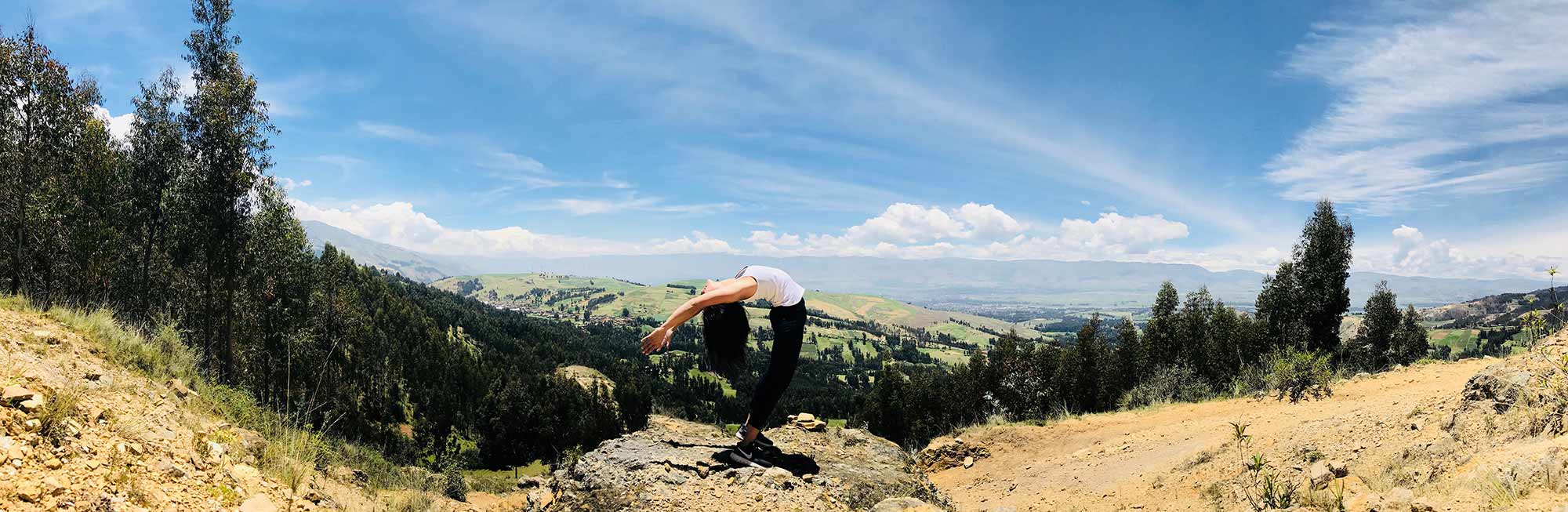
Reflecting on the little things in life in the Central Andes of Peru.

[Note: If you’re coming to visit Huancayo, see my post on What to Do in Huancayo]

My most transformative experiences have come from arbitrarily choosing a new interest or path, then summoning my inner gumption to handle the rest. I often craft a list of reasons for the inquisitive; sometimes I even manage to convince myself they’re true, but do we ever really understand why we are the way we are and why we do what we do? The truth is this: I don’t know why. It’s just a feeling I have. I feel like I need to do this and I know my life will be richer for it.

Haciendo Trekking en Huancayo
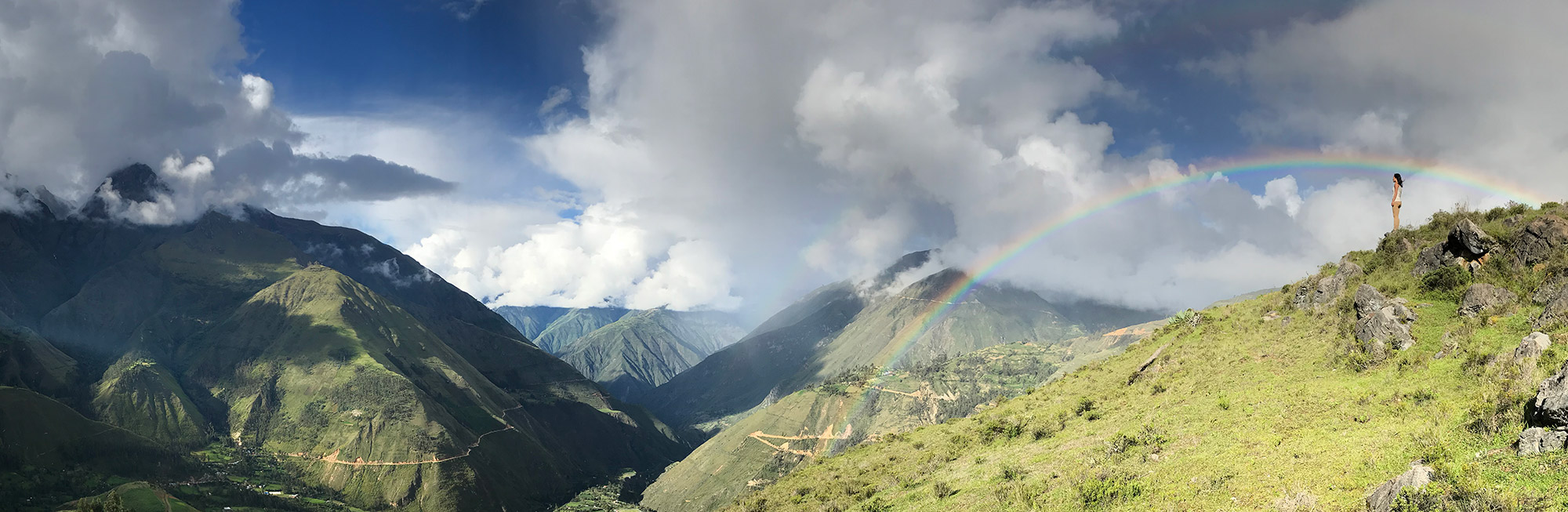
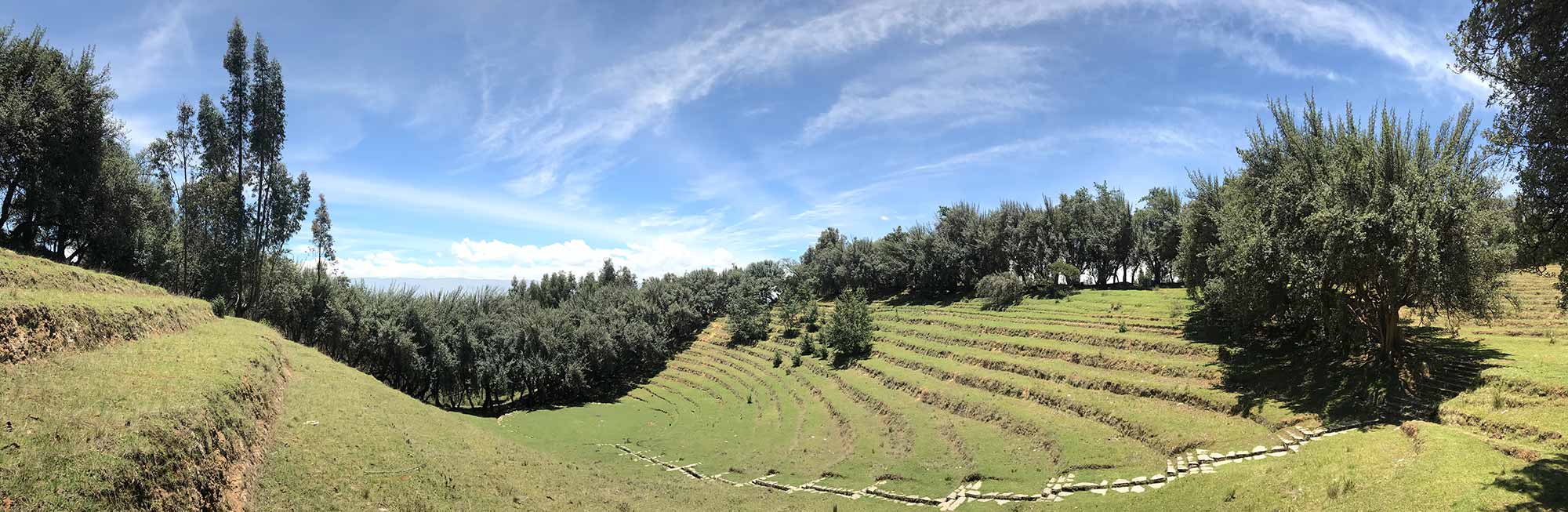
The Central Andes is a source of inspiration for me.
I am back in Peru. I will be living here in the Central Andes indefinitely. I have ideas but no set plans. I want this blog to assist me (and maybe you) in reflecting on “the little things” because thinking about “the big things” can be overwhelming and may be overrated.

Let me explain.

What attracts me to developing countries is their unpredictability; to me, this isn’t incongruous. I like how unpredictability keeps me on my feet and steers me away from the hedonic treadmill (the endless cycle of desiring, getting, adapting, expecting and dissatisfaction).

Consider these examples from my time in Peru:

  • I appreciate the simple luxuries because they are not reliably available – hot water, detergent, toilet paper, good customer service…
  • There are pleasant surprises around every corner – a puzzle competition, a street fair and fiesta celebrating another obscure saint, miracle or food…
  • I let go of not-so-pleasant surprises more easily because I know that something else weird or crazy will happen soon that diverts the attention – the time I got a mushroom haircut, the crazy marketplace lady running after you with a stick on Sunday mornings…
  • People have so many public mishaps that I feel like it’s okay to be human and am more willing to try in the face of potential failure – the daily soap opera of politicians’ lives, the one traditional dancer who always seems to light his skirt on fire…
  • The more serious calamities that I often witness or hear about remind me of mortality, to be grateful for what I have, and to live a full life that is wholly rooted in my own values – a failed abortion from mysterious rainforest drugs with consequences, three deaths in a family from doctor’s error and lack of resources…

Reflexiones de Una Viajera
I have always been one to think too much. Now I'm letting it all go, so I can focus on the little things.
These are the little things that I want to continue to reflect on: What little thing made me ecstatic today? What little thing do I want to remember about today? What little thing was I able to overcome today?

This is a conscious shift away from “the big things”: What makes me happy? What brings me peace? Do I need to change? What do I need to change? How do I change so that my life may be happier?

Considering how we don’t even really know what makes us happy (even though we think we do) and the secret may even be in not overanalyzing happiness (people never seem to become any happier thinking about their happiness as Eric Weiner concludes from his research and travels), I’m inclined to think that it might be more worthwhile to live out and document the unpredictable little things instead.

In doing so, maybe I can also move you to take more notice of the beautiful, strange and awe-inspiring little things in your life.

Samantha

Ciao Peruuu!

Here is my last post from Peru. We presented the final results to all the organizations we’re working with, I’ve said all my goodbyes, and tomorrow I leave Huancayo soil for who knows how long. Then one week left, relaxing in Lima, before I say goodbye to the country of Peru. Can’t wait to see all of you again soon!

Vacaciones

I spent my Christmas and New Year’s Huancaino-style with my Peruvian family and the rest of my vacation days travelling across the country from the beaches on the coast to jungle of the rainforest.

First stop before Christmas – Lima. As winter and the rainy season began in Huancayo (and the rest of the sierra), it was nice to escape to the summer that was starting in Lima and the coast of Peru. I managed to fit in all things tourist-y in Peru’s capital in a week:

  1. We suntanned, climbed rock formations, hunted lizards, and jumped into the waves at a serene beach a few hours away from the big city – “The Sleeping Lion” they call it because of the shape of the rock castle that borders the sand.
  2. We shopped in downtown Lima, walking up and down the famous street “Jirón de La Unión” that reaches from the main plaza to the government’s palace, drinking cremoladas (slushies you can’t find in Huancayo) and purchasing all the manta bags in sight – I think I have a collection of over 7 purses now, haha! On the last day we were in Lima, we even caught the beginning of Peru’s yearly telethon at the government’s palace with all the country’s famous celebrities performing to raise money for needy children at Christmastime.
  3. I was denied at some hostels because I forgot my passport and they wouldn’t accept my BC driver’s license. =P
  4. I finally had some really good snacks and meals – soft cinnamon buns with extra melting cream, real chunky cookies, Tony Roma’s ribs, and sushi (all also non-existent in Huancayo – been feeling deprived =P).
  5. We visited Parque de Las Leyendas (Park of Legends), which was like a themed zoo. There were native animals from all corners of Peru and some not from here (my favourites were the sea lions =D).
  6. We also visited La Casa de Papá Noel (Santa Claus’ house) at the Parque de La Reserva where there are light and water shows in the evenings. Actually, it was more like we saw Santa Claus’ house from the outside because the line-up was 3 hours long.

Christmastime was very family-oriented and although the holidays make me sentimental and a little homesick, my Peruvian family made me feel so at home here in Huancayo. My Peruvian mommy cooked a special dinner of pork chop and chorizo then we opened presents at midnight of Christmas Eve – all the presents were set up in a circle and we rolled the dice to choose which present would be opened next.

On Christmas day, we were off to the rainforest to the towns of La Merced and Pichanaki. Most days we visited different swimming pools, chicken-fighting, trying to teach myself how to dive headfirst (a failure), and playing water polo. There was one afternoon we visited a pair of famous waterfalls – Bayoz and Velo de Novia (bride’s veil) – swimming underneath the falls themselves. On the way back to Huancayo, we visited some other tourist sites in the sierra including Huagapo (apparently, one of the deepest caves in the world). We didn’t walk in very far because I had sandals on, but what we did walk into was in complete darkness. Our guide used his flashlight so we could find our way, all of us holding hands, and so that we could see the bats and all the stalagmites and stalactites that have naturally formed themselves into interesting shapes (like a seated horse and a roaring lion).

New Year’s Eve was a fiasco. A whole bunch of relatives came over for a huge dinner and nonstop dancing (mostly huayno – music native to the sierra). The theme is all yellow, which is supposed to bring good luck – yellow “2009” glasses, yellow “Feliz Año” hats, yellow clothes, yellow underwear. Come midnight, there are a series of rituals that I wouldn’t have remembered if they weren’t all telling me what to do – yellow confetti is thrown, we greet each person at the party with a hug and “Feliz Año,” we put lentils in our wallets for prosperity, we eat 12 grapes and make a wish on each one of them, then of course – more dancing. I went to bed at the late hour of 1:30am and when I woke up at 9:30am that morning, the music was still pounding downstairs and people were still dancing!

Note re: living fungal parasite. So they were mites that caused the little bug bites all over my body every evening – I just had to use an anti-scabies cream then wash my sheets and all was well. As for the rash – I had a biopsy and from the lab results it was diagnosed as chronic discoid lupus (which, to me, actually sounds sorta cool). I’m waiting for the pictures of the lab results so that I can bring them to Canada and get a second opinion. The cream he prescribed for lupus didn’t make the rash any better and he’s suggesting a corticoid injection, which I would rather have done in Canada. =P

I am a living fungal parasite.

First they tell me that the rash on my forehead is from fungus and that the fungus is probably causing the tiny rashes on my back (that I thought were just spots from being sunburnt).

Then they say that the reason I’ve been discovering more than 10 random bug bites all over my body every morning is because mites have invaded my body, are living under my skin (which is why they aren’t contagious), moving around and causing allergic reactions. Scabies. Which is so hard to believe because when Maria was getting bitten by invisible fleas during the first couple of months, I didn’t catch a thing from all the rural towns we were visiting!

But this fungal parasite starts her Christmas vacation in a week and is going to relax on the beach whether she’s all fungied up or not. =)

Parenting 101

Recently, parents have confided in Sara and I, asking for our advice on parenting, which felt ridiculous as a 23-year-old who neither has the appropriate experience, nor thinks about the subject often (if at all), nor has formally learned about parenting.

Think on these situations. Imagine what I may have been thinking when asked. Imagine the general sentiment here in Peru – an infinite amount of trust in whoever is introduced as a “specialist” and the possible lack of open conversation or education on the subject of parenting.

  1. Last week my nephew hit my son. Since then my son has been reacting to all new people he meets by hitting them. How do I erase information that he’s already learned from imitating others?
  2. My wife gave my son a bag of chocolates the other day and he started eating the whole bag even though it should have been shared with everyone in the family. So my wife took the chocolates away from him – then, of course, my son started crying. It hurt so bad as a parent to see him cry so I gave the chocolates back to him. Who was right, my wife or me?
  3. What is the best music to let my 2-year-old son listen to? I heard classical music was good for neonatals, but how about young children? The only problem is, my son won’t put up with classical music. He’ll only listen to reggaeton because that’s the type of music that his father loves.
  4. What do you think about those Baby Einstein videos? I heard that they really help to make your child smarter.
  5. My little sister always wants to rush to eat during mealtimes even though we try to explain to her that the potato is still steaming hot, for example. My mom always tells us to rush and cool down the potatoes so she can eat, but I say that we should let her learn for herself (i.e. let her touch the hot potato) or just keep the potato away even though she continues to cry. Who’s right?
  6. My baby sister always enters my room and starts rummaging through and destroying all my make-up. How do I teach her what things she shouldn’t do? How do I break her bad habits?

Me: How should I know?! I’m just a kid! Sheesh!

The Protest

My parents, being the best-est parents in the world, came to visit me for my birthday. It was a tight 3 days they were going to be here and as much as I wanted things to go perfectly, things never seem to go as planned in Huancayo. (As a side note, I have decided that I will always plan future vacations for more than 2 weeks). Not only did things not go as planned, but during the few days they were here, my parents and I experienced a series of firsts.

La Huelga
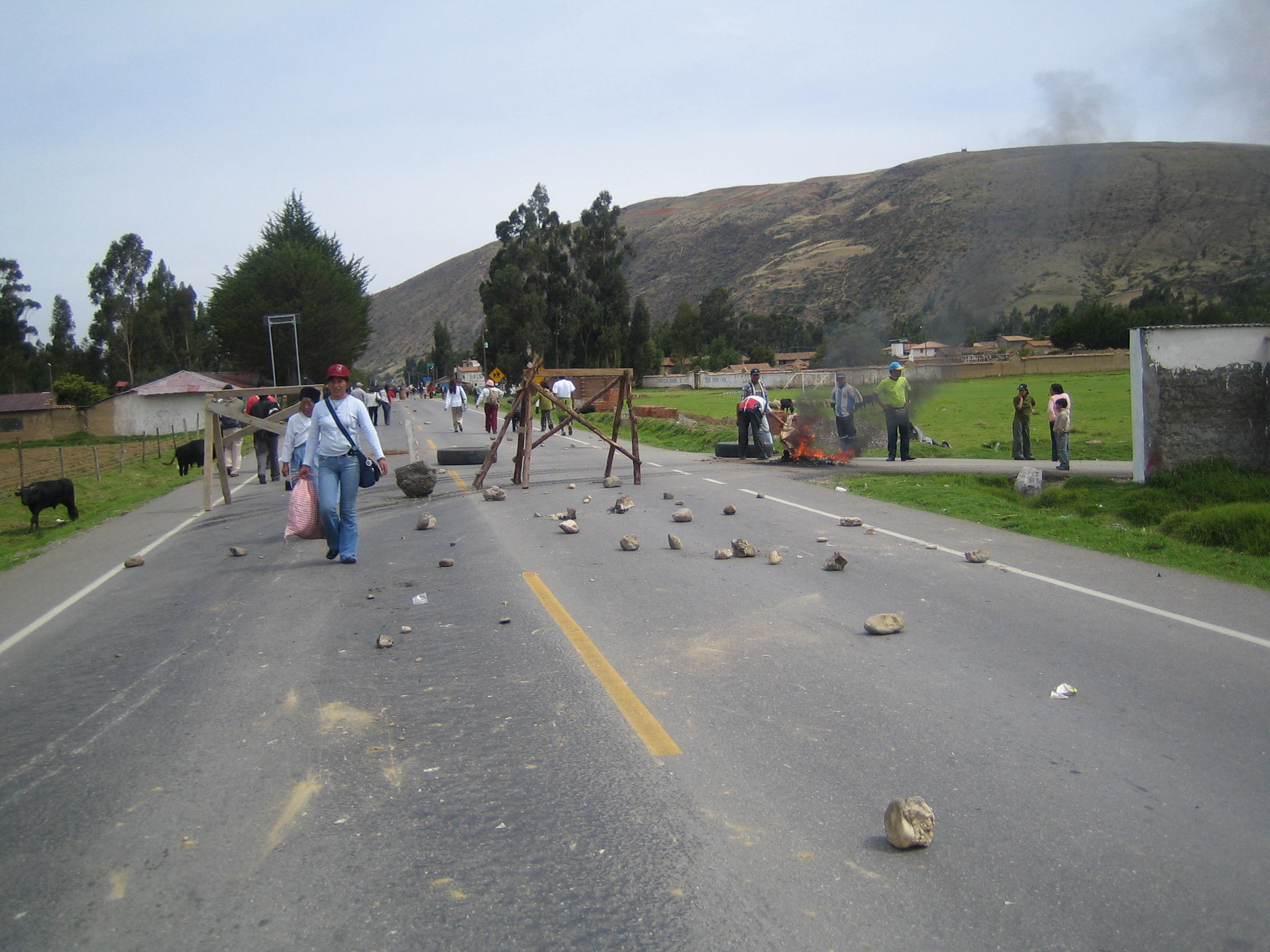
This is what we had to walk through to get back home.
The Saturday evening my parents arrived, we had planned to go out for a birthday dinner, but it started to rain hard. It would be the first of three days in a row that it would hail golf balls in the afternoon. They say it was the first time it had ever hailed so much in Huancayo.

I had planned Sunday to be as Huancaino as possible, which is what my parents wanted – first, the patriotic flag ceremony in the main plaza and the parade that follows, led by the military’s band. I’ve seen at least part of the parade almost every Sunday because I love that community feel when all the families come out, kids running around, buying paper hats and ice cream. So, my parents and I are out there, ready and on time to see the whole thing, but the flags are already up, no ceremony. Turns out, it was the day of the yearly “Marathon of the Andes.” They had suspended the flag ceremony for the day to cheer on the exhausted runners who had started from Jauja.

On the Monday, the last full day my parents would be here, I had to go to work. I left early in the morning for Jauja where we were doing some home visits, finished as quickly as possible and was on my way home by noon so I could spend the rest of the afternoon with my parents. The only thing stopping us from getting back were a million huge stones, lit up tires, and tree trunks lying across the highway – the 2,500 citizens of Concepción (a city in between Huancayo and Jauja) were protesting against all the garbage Huancayo was dumping in their little town. It was my first time experiencing a protest. We walked for two hours past all the vehicles, past all the road obstructions, past the crowd of protestors, past the police on the other side with their body-length shields, to the part of the highway where cars were finally moving.

Thankfully – although the protest continued through the rest of the week – my parents were able to get out of Huancayo safely and on schedule. Thanks for coming to visit, mum and dad!

A Thousand Miles

I have spent a lot of time lately, walking. I used to know a guy in Japan who would walk for miles and miles, just wandering, and I always wondered how he did it. How can someone not bore themselves to death just walking around the city for hours on end? He would come back from his walks and tell us how beautiful the cherry blossoms were in a certain part of town he had discovered or what kinds of shadows the sun makes on the hills as the sun sets. In Japan, I remember thinking, what a bore nature is. I wanted to be able to appreciate nature so badly, but I couldn’t find the time; I didn’t care to find the time to slow down.

So I’ve been slowing down here and walking from place to place, almost an hour each way. As of now, I am still consumed by the following three thoughts: “Holy bejeezus, this walk is taking forever,” “My feet hurt,” and “Am I there yet?” It’s just another example of how I am so stuck on the end result, on crossing things off of my to-do list, that I don’t know how to just walk anymore.

I’m not willing to leave things unorganized. I’m not ready to just let things be. As I walk, I realize how many houses are left unfinished. In Vancouver, I see unfinished buildings and the rush to finish construction, the rush to complete the perfection that the city is to be by the time the Olympics arrive in 2010. In Huancayo, I see unfinished buildings… as unfinished buildings. That’s just the way they are, sometimes for months or years as the family struggles to earn more money, sometimes forever.

And it makes me think of the thirty houses I’ve visited in and around the city of different types of families – different structure, different situations, different economic levels. But I’ve found that the majority of families live in houses that I would consider messy or dirty. To them, it’s okay that there are a million utensils in the kitchen out of place or forever without a place, it’s okay that all their mugs are cracked or chipped in some way, it’s okay that there are irremovable stains everywhere – in the tiles of the floor, in the cabinets, the dressers, the stove, the walls. It’s okay that their closet is actually a shelf with a blanket over top, tilted a bit and never perfectly covering the entire shelf. It’s okay if there are a million projects in-progress that may never be finished. It is a situation that would normally make me go insane, but I am learning to relax.

My professor from Canada came to visit for a whirlwind week and packed in…

  • A 2-day conference on infant stimulation that we’ve been planning for months,
  • A full day of hardcore bulk shopping in the Sunday fair that spans more than 30 city blocks of the main street through Huancayo (mostly jewellery for her and millions of other trinkets that her son can sell back home),
  • And the rest of the week was spent conducting full days of research with babies and toddlers in San Pedro de Saño (a little town just outside of the big city).

Part of her assignment here was to conduct mid-internship Coady interviews individually with Maria and me. The question that had me thinking went something like this: “What skills have you learned from your internship that will benefit you in your future work?” Skills, skills, skills. The first skills that came to mind when I thought of what I’ve learned here in Huancayo had nothing to do with my internship. I thought of how I could now fill the kettle without it spilling in pitch darkness, notice the slight difference in sound when the water had started boiling, and how my internal clock knew when the 10 minutes of boiling time was up (to be sure the water was purified) because I do this every morning to make my coca tea. I thought of how I skilled I was at doing laundry by hand (well, sorta). I thought of how I learned to keep an apartment clean (because Maria made me, just kidding – sorta; she was the positive influence, that’s what I meant). And I’d like to say that I can now cook, but just the other day, I suggested we add mango pieces to our pasta dish and Maria said that it would never work. =P It is a skill that will take a much longer time for me to learn, I’m afraid.

In any case, I had to think twice to respond to the actual question. What skills had I learned? Not just any skill, but something that will benefit me in my future field? I’ve learned a heck of a lot about international development – which I didn’t even know existed prior to arriving in Nova Scotia for training – but to be honest, I’m not so sure I’ll be involved in this field in the future. It had to be something more abstract.

Then, it came to me. “Flexibility and patience,” I answered. It is a skill to be able to get along with people from other cultures, whether it’s the Dutch (there is the couple who started the NGO and the other two volunteers from the Netherlands) or the wide variety of Peruvians here (of different ages, ethnic backgrounds, and lifestyles). It’s about learning to accept differences, personal boundaries, and idiosyncrasies, taking everything in with an open attitude instead of succumbing to the natural temptation to judge. For me personally, it was also what I needed in order to learn the language – flexibility in the choice of words (because not every phrase can be translated literally) and patience with myself as I made a million mistakes.

As I thought of that, I realized that another skill I had developed (that I had wanted to develop) was the ability to laugh at myself. Recently, we (the interns in all the different corners of the world) were sent the letters we had written to ourselves at the beginning of everything, in July when we were still in Nova Scotia. I had written, “I hope you learn to laugh at yourself.” I think I had to lose the fear of embarrassing myself especially when you’re learning to speak a foreign language because it’s bound to happen that you’ll be telling someone, “Can I feel myself here?” (sentirme) instead of “Can I sit here?” (sentarme).

It seems to me that a fundamental issue many have once they start working full-time is that they stress out, take things personally, take things too seriously, and start thinking only about themselves and their dissatisfaction. This is when these skills will come into play in my future work: flexibility (letting things be as they are instead of always fitting things into a certain schedule or plan), patience (with myself as I know that I will inevitably make mistakes and I will be the most conscious of this if I ever find myself in a more senior position, with higher expectations of myself and more susceptible to being intolerant of my blunders), and the ability to laugh at myself (to keep relaxed in this way, living life light-heartedly so that I have a balanced relationship with myself, my co-workers, my family, and my friends).

Copyright © 2026 Samantha Bangayan | Sitemap | Disclosure Policy | Comment & Privacy Policy
All articles and photos in this blog are licensed under the Creative Commons Attribution License CC BY-NC-ND 3.0.